

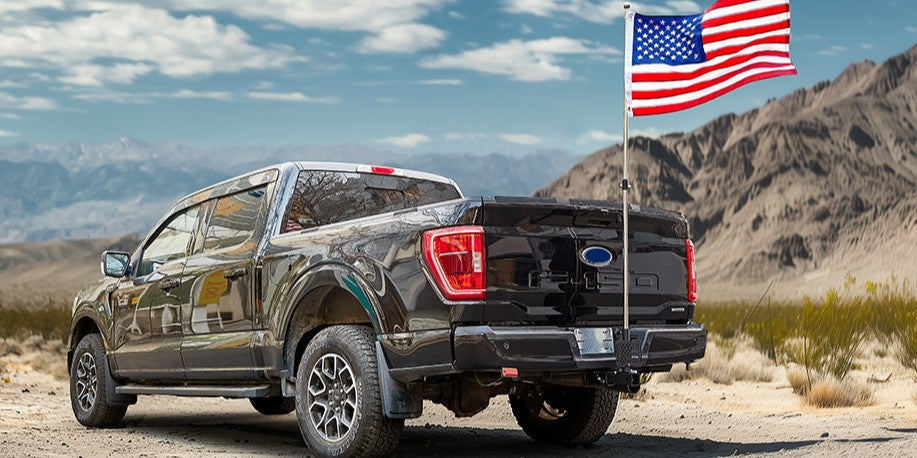
Selecting a new truck is a significant decision, especially when comparing two titans like the Ford F-150 and the F-250 Super Duty. Recent automotive trends show that more drivers are looking for vehicles that serve dual purposes: a reliable workhorse during the week and a capable adventure vehicle on the weekends. With the 2026 models introducing smarter towing technology and more efficient engine options, the gap between "light-duty" and "heavy-duty" is evolving. Many buyers find themselves torn between the nimble handling of a half-ton and the raw strength of a three-quarter-ton truck. Whether you are planning to tow a massive fifth-wheel trailer or simply want a comfortable commute with occasional DIY projects, understanding the technical and practical nuances is essential.
This article will show you the key difference between these 2 popular models and help you make the right buying decision. Let’s dive in!
Understanding the Core Difference Between F-250 and F-150
To choose the right vehicle, you first need to understand how these trucks are built from the ground up. While they may look similar at a glance, their foundations are designed for very different levels of stress and weight.
The primary difference between F-250 and F-150 lies in their classification; the F-150 is a light-duty, half-ton pickup, while the F-250 is a heavy-duty, three-quarter-ton truck. The F-150 uses a high-strength, fully boxed steel frame that prioritizes a balance between weight and durability. In contrast, the F-250 features a much beefier frame and a more robust suspension system designed to handle the vertical pressure of heavy gooseneck or fifth-wheel trailers. This mechanical gap means the F-250 can stay stable under loads that would push an F-150 to its legal and physical limits.

Pictured by Ford 2026 F-150 XL

Pictured by Ford 2026 F-250 XL
Performance and Power: Ford F-250 vs. F-150 Engines
Engine variety is a hallmark of the Ford brand, allowing owners to customize their power delivery based on their specific needs. Both trucks offer impressive numbers, but the type of power they deliver varies significantly.
When comparing the Ford F-250 vs. F-150, you will notice the F-150 offers a wider range of engines, including the efficient PowerBoost Hybrid and the nimble 2.7L V6 EcoBoost. These engines are perfect for quick acceleration and better fuel economy during city driving. The F-250, however, moves into the realm of "big block" gasoline engines and the legendary 6.8L Gas 2V DEVCT NA PFI V8 gas engine. If your travel plans involve climbing steep mountain passes with a heavy load, the massive torque of the F-250 diesel engine is hard to beat.
Towing and Payload: F-250 and F-150 for Hauling
Towing is often the deciding factor for camping enthusiasts and professionals who need to move heavy equipment. It is important to look beyond the maximum numbers and consider how the truck feels while under load.
The difference between F-250 and F-150 becomes most apparent when you look at the spec sheet for hauling. The F-150 is incredibly capable for its class, often towing up to 13,500 pounds when properly equipped. However, the F-250 is built for much more, with towing capacities that can exceed 21,000 pounds. Payload—the weight you can carry in the bed—is also significantly higher on the F-250, making it the better choice for those installing heavy truck campers or hauling large amounts of gravel and tools.
|
Feature |
Ford F-150 |
Ford F-250 |
|
Classification |
Light-Duty (Half-Ton) |
Heavy-Duty (3/4-Ton) |
|
Max Towing |
Approx. 13,500 lbs |
Approx. 21,000+ lbs |
|
Common Engines |
3.5L EcoBoost, 5.0L V8, 2.7 V6 |
6.8L V8, 7.3L V8, 6.7L Diesel |
|
Rear Suspension |
Leaf Springs or Coil (Raptor) |
Heavy-Duty Leaf Springs |
|
Best For |
Daily driving & light towing |
Heavy hauling & commercial work |
Daily Driveability: Which One is Better for You?
Power certainly matters, but you should also think about the role of the truck in your daily life. A truck too big for your garage or one excessively heavy on fuel can very quickly become a source of headache.
As far as the Ford F-250 vs. F-150 argument for daily use goes, the F-150 usually scores higher on comfort and convenience. It's shorter, lower, and easier to fit into typical grocery store parking spaces or residential garages. Besides, the suspension is set to be softer, so you get a car-like ride when the bed is empty. In contrast, the F-250 has a far firmer ride since its springs are made to be compressed by the weight; without a load, the vehicle can feel quite "bouncy" on rough roads. What is more, the F-250 is quite a bit taller than the F-150, which could even prevent the driver from going through a low-clearance parking facility.
Interior Comfort and Modern Technology
Ford has closed the gap between work truck and luxury vehicle with its high-end trims' availability in both their lineups. Whichever one you pick, Lariat, King Ranch, or Platinum, the comfort and quality of the interior will be of a very high standard. The cabin layout and technology differences between the F-250 and F-150 are barely noticeable. Both offer SYNC 4 infotainment, large 12-inch touchscreens, and wireless Apple CarPlay. The F-150 normally gets "lifestyle" features first, like the Interior Work Surface or the Pro Access Tailgate. In contrast, the F-250 is more geared to "work" features, such as 360-degree trailer camera systems and onboard scales that inform you how much weight you have loaded into the bed.
Fuel Efficiency and Daily Drivability
The F-250 and F-150 are likely to have the biggest difference, showing a visit to the gas station or when you need to park near a grocery store, for instance. Their sizes and fuel needs are quite different from these two trucks.
F-150 is definitely a top choice for fuel-economy-concerned one's. It was unimaginable that a full-size truck could be so efficient before hybrid powertrains became available. Besides, it is less challenging to drive in tight locations and will even fit most standard residential garages. You and your family members could live your lives in a more comfortable and affordable way if your truck is also your primary vehicle for commuting.
F-250 has a larger physical presence in all aspects. It is taller and longer, which in the case of it, keeping the urban areas' parking would be a real hassle. Fuel consumption in heavy-duty trucks is considerably higher as the engine and transmission have to be specifically set up for towing weight, not for cruising for efficiency. Nevertheless, individuals who need the power can simply regard the extra fuel cost as one of the necessary job elements.
Pricing and Value: Ford F-250 vs F-150
One of the factors to consider when deciding which one to buy between Ford F-250 and F-150 is the long-term value and the initial price. Both of them are great to keep their value, but they are for people deciding on different budgets.
As a rule of thumb, the F-150 tends to cost less at the base level, which is one of the reasons that it is bought by more people. Also, since there are more trim levels and engine options available in F-150 line, you can almost always find one that will suit your budget. On the other hand, due to the inclusion of the heavy-duty components in the F-250 plus larger standard engines, the price point starts at a higher level. Although the price at the beginning is usually the higher one, in most cases the F-250 still is able to fetch a high resale price, especially in the case that the diesel engine is selected. In addition to the price of the van, you are going to have to think about the price of the insurance and upkeep, which, as a rule, are higher for the Super Duty models.
Choosing Your Path: F-150 or F-250?
Finalizing your choice requires an honest assessment of your current needs and your future plans. It is better to have a bit too much capability than not enough, but you don't want to pay for power you will never use.
Choose the F-150 if:
✔ You use your truck as a daily driver for commuting and errands.
✔ You tow a boat, a small travel trailer, or a utility trailer occasionally.
✔ Fuel efficiency and garage-ability are high priorities for you.
✔ You prefer a smoother, more car-like ride on the highway.
Choose the F-250 if:
✔ You own a large camper or horse trailer that exceeds 10,000 pounds.
✔ You frequently carry heavy payloads in the bed for work or construction.
✔ You prefer the longevity and torque of a diesel engine for long-distance hauling.
✔ You need a truck that is "overbuilt" to handle the toughest environments without breaking a sweat.
Enhancing Your Journey with Ford Accessories
No matter which truck you choose, the stock version is just the beginning for most outdoor enthusiasts. Customizing your vehicle with high-quality Ford accessories can turn a standard pickup into a professional-grade travel companion.
At JOYTUTUS, we provide a variety of solutions to fill the gaps left by factory designs. Consider these popular upgrades:
- Storage Solutions: Under-seat Storage Molle Panel to keep your tools and gear from sliding around the cabin.

- Roof Rack Basket: Make full use of your roof space when you are carrying a lot of luggage going out.
- Adjustable Roll Bar: Keep cargo secure on rough terrain and improves utility and roll-over protection for off-road or heavy-duty use.
Final Thoughts
In the end, the difference between F-250 and F-150 is about matching the tool to the task. Ford has spent decades refining these trucks to ensure that every type of driver has a vehicle that meets their specific demands. Whether you are hitting the trails for a camping trip or hauling equipment to a job site, your truck is your most important tool. By understanding the mechanical differences and considering how you will use the vehicle daily, you can make a confident decision. Don't forget that the right accessories and a bit of DIY spirit can take a stock Ford and turn it into a personalized travel hub. Safe travels and enjoy the road ahead in your new Ford truck.

Leave a comment
All comments are moderated before being published.
This site is protected by hCaptcha and the hCaptcha Privacy Policy and Terms of Service apply.