

Ford trucks and SUVs had a strong first half of 2026. F-Series sales reached 357,801 units through June, keeping it the best selling truck in America, while the Bronco posted a record first half with 76,936 units sold and even outsold the Jeep Wrangler in the second quarter. The Explorer also held its title as the best selling three row SUV in the country. With more Fords on the road than ever, more owners are asking the same practical question: how do you get in and out of a tall truck or SUV without straining your back or scuffing your paint?
Running boards answer that question. They give you a stable place to plant your foot, keep mud and salt off your rocker panels, and make loading kids, pets, or gear a lot less awkward. But not every set is built the same, and picking the wrong one can mean poor ground clearance, a wobbly step, or a board that simply does not fit your cab.
This guide walks through what buyers need to know before they choose running boards, whether you drive an F150, a Bronco, a Ranger, an F250, or an Explorer. If you are planning on installing running boards for your Ford, the following three points in bold are what you need to focus on.
Here is what this article will cover:
- What running boards do and why Ford owners add them
- The main styles, materials, and mounting options available
- Running board options for different Ford models
- How to choose the right set for your driving style and budget
What Running Boards Do for Your Ford
Running boards are not just a styling accessory. They solve a real, everyday problem for anyone who drives a lifted or naturally tall vehicle.
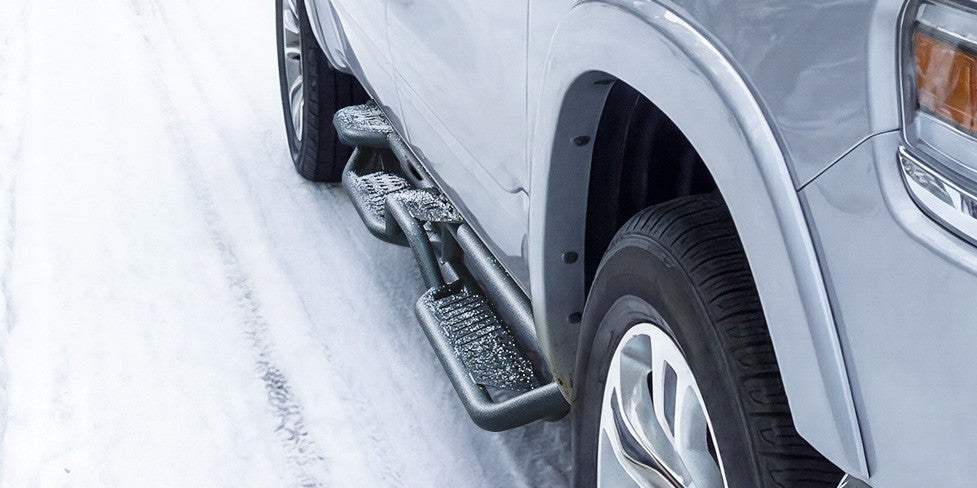
A wide, flat running board gives you and your passengers a stable step into the cab, which matters most for kids, older family members, or anyone carrying gear in both hands. Running boards also shield the lower door panels and rocker area from gravel, mud, and road salt, which helps protect your paint and slows down rust over time. For families and work trucks alike, that combination of safer entry and body protection is usually what pushes buyers to add a set. For a deeper breakdown of how running boards compare to nerf bars and side steps, see the running board basics guide from JOYTUTUS.
The Basic Point: Styles, Materials, and Mounting
Before comparing specific Ford models, it helps to understand the choices that apply across the board, no matter which vehicle you drive.
Most boards fall into one of three categories:
- Fixed running boards stay in place at all times. They are simple, affordable, and require no wiring, which makes them a popular choice for daily drivers and work trucks.

- Power running boards extend automatically when a door opens and retract when it closes. They keep ground clearance high while parked or off-road but cost more and involve a slightly more involved install.
- Side steps or nerf bars use a narrower, tubular design instead of a flat platform. They weigh less and sit tighter to the body, which appeals to buyers who want a rugged look and do not need the widest possible step surface.
Material matters just as much as style. Carbon steel is strong and budget-friendly but needs a good protective coating to resist rust. Aluminum is lighter and naturally corrosion resistant, which is why it shows up on many SUV applications. Stainless steel sits at the premium end, offering the best corrosion resistance along with a polished look.
|
Feature |
Fixed Running Boards |
Power Running Boards |
Side Steps / Nerf Bars |
|
Typical price range |
Budget-friendly |
Higher cost |
Budget-friendly |
|
Installation |
Simple bolt-on |
Bolt-on-plus wiring |
Simple bolt-on |
|
Ground clearance |
Slightly reduced |
Full clearance when retracted |
Minimal impact |
|
Step surface width |
Wide |
Wide |
Narrow |
|
Best for |
Daily drivers, families |
Lifted trucks, mixed use |
Off-road builds |
Ford F150 Running Boards: What to Look For
The F150 is Ford's highest volume vehicle, and it is also the truck most owners choose to lift or fit with larger tires, both of which raise ride height and make a step more useful.
When shopping for F150 running boards, cab configuration is the first thing to check. The F150 comes in Regular Cab, SuperCab, and SuperCrew body styles, and each one uses a different board length, so confirm your exact cab size before ordering.
Running Boards for the Ford F150 SuperCrew
The SuperCrew is the most popular F150 configuration, thanks to its four full size doors and rear seat room, which is exactly why running boards for Ford F150 SuperCrew models are in such high demand. Because the SuperCrew has four doors to cover, buyers typically look for a full length, cab length board that reaches every entry point without gaps. A wide, textured step surface is worth prioritizing, since SuperCrew owners are more likely to be loading kids or passengers into the back seat on a regular basis.
For F150 side steps specifically, weight capacity is another detail to check. Most running boards on the market are rated between 300 and 500 pounds per side, and it is worth confirming that number against how you plan to use the truck.
Ford Bronco Running Boards and Side Steps
The Bronco's record breaking sales in 2026 tell you something important: this is a vehicle bought by people who plan to take it off-road, not just drive it around town. That changes what matters most in a set of running boards.
Bronco owners tend to split into two groups. Two-door owners often favor a narrower rock slider style side step that hugs the body and protects the rocker panel on the trail. Four-door owners, who have more doors and passengers to manage, more often lean toward a wider running board for easier entry. Either way, ground clearance is the top concern for most shoppers, since the Bronco is frequently driven on uneven terrain where a low hanging step can catch on rocks or ruts.
If off-road use is part of your plan, look for boards built from thick-wall steel tubing rather than thin stamped aluminum, since tubing holds up better to impacts. A textured, powder-coated finish also resists scratching from mud and gravel better than a painted one.
A few practical points to weigh when comparing Bronco side steps:
- Confirm two-door versus four-door fitment, since the two body styles use different mounting points.
- Look for a design that keeps a reasonable approach and departure angle if you regularly drive off-road.
- Choose a textured tread surface for wet or muddy conditions rather than a smooth one.
- Check whether the kit uses factory mounting holes, since that usually means no drilling is required.
Ford Ranger Running Boards
The Ranger sits between the compact and full-size truck segments, and its running board needs reflect that middle ground. Ranger owners are usually looking for a set that improves everyday access without adding excessive bulk to a truck that is already easier to climb into than an F150 or Super Duty.
For most Ranger owners, a mid-width running board or a set of side steps strikes the right balance. Since the Ranger is available in SuperCab and SuperCrew configurations, the same fitment rule applies here as with the F150: match the board length to your specific cab. See the Ford Ranger running boards guide for more on fitment.
Ford F250 Running Boards
Super Duty trucks like the F250 sit noticeably higher than the F150, particularly with factory 4x4 packages or a lift kit. That extra height makes a step less of a luxury and more of a practical necessity for many owners.
Because the F250 is heavier and often used for towing or work duty, buyers should pay close attention to weight rating and mounting strength. A frame-mounted board generally holds up better to repeated heavy use than a rocker-mounted option, since the load transfers into the truck's frame rather than the body panels. See the F250 running boards guide for fitment specifics on this platform.
Ford Explorer Running Boards
As America's best selling three row SUV, the Explorer carries families, gear, and everything in between, which puts a premium on easy, safe entry for every row of seating. Running boards on an Explorer are less about off road protection and more about convenience for kids, aging parents, and anyone loading a stroller or cargo through the rear doors.
Explorer owners typically do best with a running board that offers a wide, low profile step and a finish that matches the vehicle's factory look. Since the Explorer is a unibody SUV rather than a body on frame truck, mounting hardware is usually rocker or pinch weld based rather than frame mounted. More detail on Explorer-specific fitment is available in the JOYTUTUS Ford Explorer running boards guide.
How to Choose the Right Running Boards for Your Ford
With so many options across the Ford lineup, it helps to narrow the decision down to a short checklist:
- Confirm your exact model, cab size, and door count before ordering
- Decide between fixed, power, or side step styles based on budget and use case
- Match weight capacity to how you actually plan to use the step
- Choose a material and finish suited to your climate, especially if you deal with road salt or heavy rain
- Consider ground clearance if you drive off-road regularly
Once you have narrowed down the style and fitment, installation is usually the easy part. Most kits use factory mounting points, so no drilling is required, and a set can typically go on in under an hour with basic hand tools. JOYTUTUS walks through the full process step by step in its running board installation guide, which is worth a read before your parts arrive.
Final Conclusion
Choosing the right running boards for your Ford comes down to matching the product to your vehicle and how you drive it. F150 and F250 owners generally want a wide, strong step that handles daily loading and towing duty, Bronco owners lean toward rugged, high clearance designs built for the trail, and Ranger and Explorer owners often prioritize a clean fit with easy, everyday access. Whatever model you drive, confirming cab size, weight needs, and finish before you buy will save you a return and get you a set that fits right the first time. Explore the running boards at JOYTUTUS to find the fit built for your truck or SUV.


Leave a comment
All comments are moderated before being published.
This site is protected by hCaptcha and the hCaptcha Privacy Policy and Terms of Service apply.