

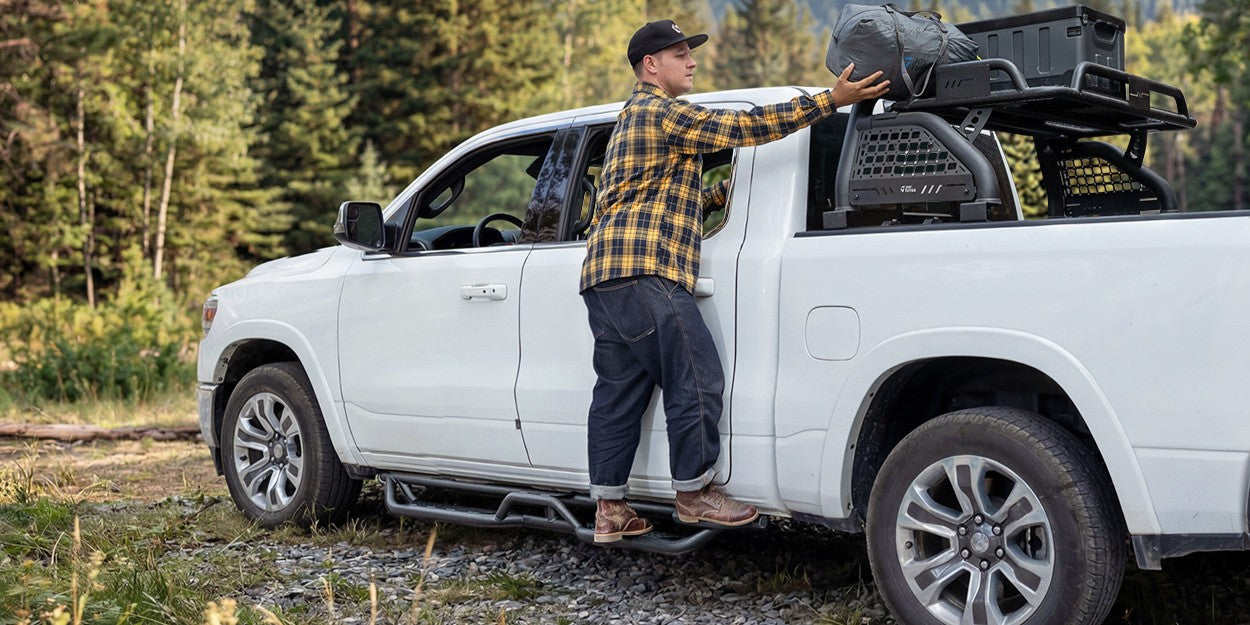
Pickup trucks keep getting taller. Bigger tires, factory lift packages, and four-wheel-drive setups all add ride height, which is great for clearance but not so great for the person trying to climb into the cab. A recent truck accessories market report found that running boards saw installation growth of more than 23 percent among SUV and pickup owners focused on passenger accessibility and looks, and the broader market is expected to keep growing well past 2030. That trend lines up with what most truck owners already know from experience: getting in and out of a lifted truck is harder than it should be.
This guide breaks down everything you need to know about pickup running boards, from the features that separate a good set from a flimsy one to the different types on the market today. We will also look at why JOYTUTUS running boards have become a popular pick for truck owners who want a durable, no-fuss upgrade.
Here is what we will cover:
- Why running boards matter for everyday driving, not just off-road trips
- The key features that make a set of pickup side steps worth buying
- The main types of side steps for pickup trucks and how they compare
- What sets JOYTUTUS pickup truck running boards apart
- How installation works and what to expect
- Common questions truck owners ask before buying
Why Pickup Truck Running Boards Matter
A set of running boards solves a problem most truck owners do not think about until it affects them directly. This section looks at who benefits most and why the upgrade tends to pay for itself.
Trucks sit higher off the ground than nearly every passenger car on the road. That extra height is useful when you are crossing a rutted trail or fording a shallow creek, but it becomes an obstacle the moment you are loading a child into a car seat, helping an older parent into the front seat, or just trying to grab gear off the roof rack after a long day. Pickup truck running boards close that gap. They give everyone a stable, flat surface to step on, which makes climbing in and out feel natural instead of like a small workout.
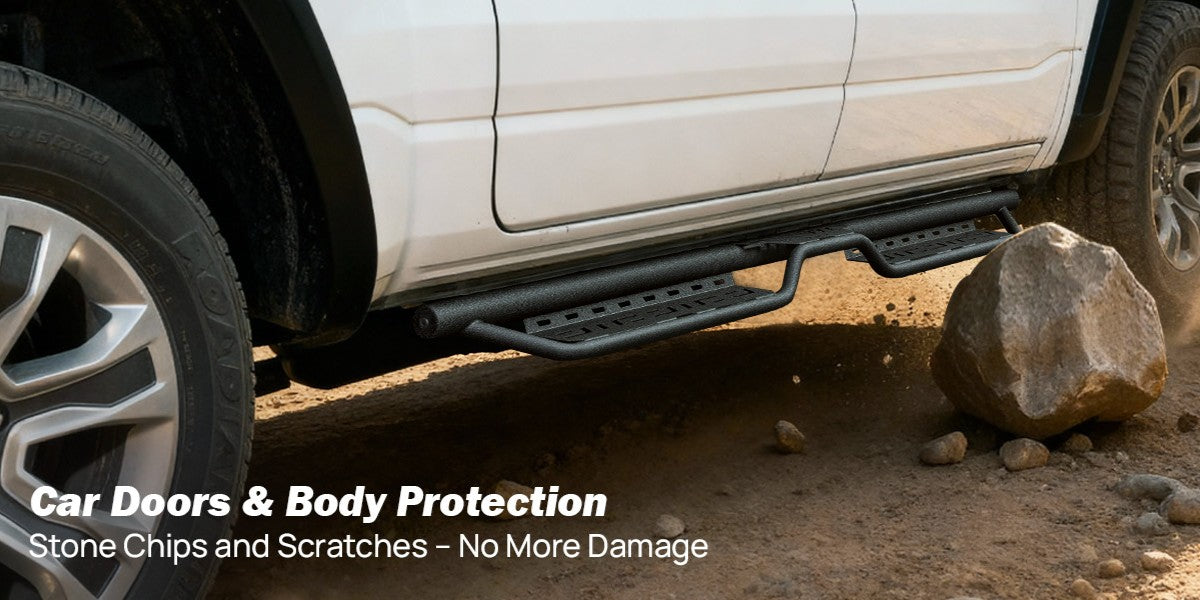
There is also a protection angle that often gets overlooked. Running boards sit along the lower edge of the truck body, which means they take the hit when a shopping cart drifts too close in a parking lot or when low brush scrapes the rocker panel on a trail. Many owners think of side steps purely as a convenience item, but they double as a buffer that keeps dings and scratches off the actual door panels.
Finally, there is the look. A truck with running boards reads as more finished and more purposeful. It is a small change that makes the whole vehicle appear taller, wider, and more deliberately built, which is part of why running boards remain one of the most popular aftermarket upgrades year after year.

What Makes a Good Set of Pickup Truck Side Steps
Not every set of running boards on the market is built the same way. Before you buy, it helps to know which features actually matter and which ones are just marketing.
Material and Corrosion Resistance
The biggest long-term threat to any running board is rust. Road salt, mud, and constant moisture exposure will eat through a poorly coated board within a couple of winters. Quality pickup running boards use heavy-gauge steel or aluminum with a multi-stage coating process, often a combination of an electro-coat primer, a powder coat layer, and a textured topcoat. This kind of layered protection is what allows a set of side steps to hold up season after season without showing rust spots.
Anti-Slip, Dual-Tier Step Design
A running board that looks good but turns slippery in the rain is not doing its job. Look for boards with a textured tread pattern designed specifically to grip boots and shoes in wet or muddy conditions. A dual-tier design, meaning two separate step levels, is also worth prioritizing. The lower step makes entering the cab easier, while the upper step gives taller users or anyone reaching for the truck bed or roof rack a stable place to stand.
Weight Capacity
Weight capacity tells you how much real-world abuse a board can take without flexing or bending. Lower-end boards are often rated around 300 pounds per side, which can feel shaky under an adult in work boots. Mid-range and premium pickup truck side steps are typically rated between 500 and 550 pounds per side, which holds up better for families, larger passengers, or anyone using the board to load heavy gear.
Installation Method
Most aftermarket running boards for pickup trucks are designed as bolt-on products that use the truck's existing factory mounting points. That means no drilling, no cutting, and no permanent modification to the vehicle. Pre-aligned holes and included brackets make a big difference here, since a board that requires guesswork on alignment can turn a 30-minute job into an afternoon project. For a full walkthrough of what installation actually involves, our guide on how to install running boards covers the process step by step.
Here is a quick rundown of the main qualities to check before buying any pickup steps and running boards:
- Steel or aluminum construction with multi-layer corrosion protection
- Textured, dual-tier steps for safe footing in any weather
- A weight rating of at least 500 pounds per side
- Bolt-on hardware that matches your exact cab and bed configuration
- A finish that matches or complements your truck's factory look
Types of Side Steps for Pickup Trucks
Running boards are not a one-size-fits-all product. Depending on your budget, your truck's height, and how much maintenance you want to deal with, one style will usually fit your needs better than the others.
Nerf bars are the simplest option. They are narrow tube-style steps that run along the rocker panel, offering a single step and a bit of door protection without adding much visual bulk. Full-width running boards extend further and usually include the dual-tier design discussed earlier, giving a wider, more stable platform for stepping and standing. Power retractable boards are the most advanced option. These motorized steps drop down automatically when a door opens and tuck back under the truck when it closes, keeping the underside cleaner when not in use.
|
Type |
Typical Price Range |
Step Width |
Maintenance |
Best For |
|
Nerf bars |
$200–$500 |
Narrow |
Low |
Budget buyers, minimal style change |
|
Full-width running boards |
$250–$400 |
Wide |
Low |
Families, daily drivers, off-roaders |
|
Power retractable boards |
$1,800–$2,500+ |
Wide, motorized |
Moderate to high |
Owners who want automation and a clean look |
For most pickup owners, a fixed full-width board strikes the best balance of cost, durability, and everyday usefulness. It avoids the moving parts and wiring that come with powered systems while still giving the wide, stable step surface that makes a real difference for passengers.
Why JOYTUTUS Running Boards Are Worth Considering
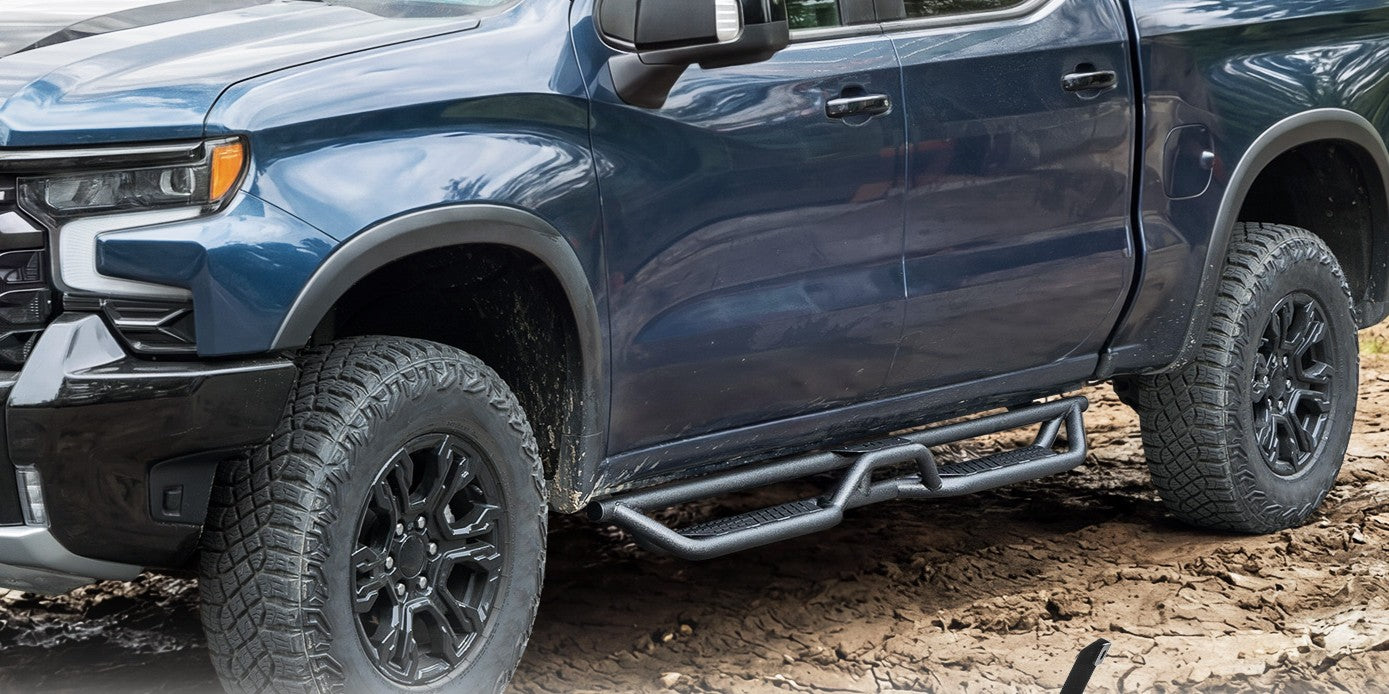
JOYTUTUS designs its lineup of pickup running boards around the same three priorities discussed above: strong construction, safe footing, and a straightforward installation process. Each set is built from heavy-gauge carbon steel and put through a multi-stage coating process that includes electro-coating and a textured powder topcoat, the same kind of layered protection that keeps rust spots from forming even after years of exposure to rain, snow, and road salt.
The dual-tier step design used across the JOYTUTUS lineup gives a textured, wrinkle-finish surface built for grip in wet or muddy conditions, which matters for kids, older passengers, and anyone climbing in wearing work boots. Most models are also rated to handle 500 to 550 pounds per side, so the board stays solid under real-world loads instead of flexing.
Fit and installation get the same level of attention. JOYTUTUS pickup truck running boards are engineered for specific cab and bed configurations across Ram, Chevrolet, GMC, and Jeep platforms, using factory mounting points so there is no drilling required. Pre-aligned holes and included brackets typically bring installation time down to around 30 minutes, making it a practical weekend project for most owners. You can browse the full range of fitments in the running boards collection to find the right match for your truck.
A few JOYTUTUS models also include a removable center accent panel, which lets owners repaint that section to match their truck's trim or add a personal touch without buying a whole new set of boards.
If you want a deeper look at how running boards work and which features matter most before you shop, our guide on what running boards actually do and our broader breakdown of running board options are both useful starting points.
Installing Pickup Steps and Running Boards
Most owners can install a bolt-on set of running boards themselves in well under an hour. Here is the general process most kits follow:
- Park on level ground and gather the included hardware, a socket set, and a torque wrench
- Locate the factory mounting points along the truck's rocker panel
- Attach the mounting brackets loosely so you can adjust alignment before final tightening
- Lift the running board into place and connect it to the brackets
- Check that the board sits level and flush against the body
- Torque all bolts to the recommended spec once alignment is confirmed
Because most kits use pre-aligned holes and factory mounting points, there is rarely a need for drilling. If you want the complete step-by-step breakdown, including torque specs and common mistakes to avoid, our dedicated running board installation guide walks through the entire process with video.

Final Thoughts
Pickup running boards are one of those upgrades that feel small at first glance but make a noticeable difference every single day. They make entry and exit easier for every passenger, protect the lower body panels from everyday wear, and finish off the truck's look in a way that feels factory rather than aftermarket. When you are shopping, focus on the fundamentals: corrosion-resistant construction, a textured dual-tier step design, a weight rating that matches your real-world use, and an installation process that fits your existing truck without modification. Get those right, and you end up with a set of side steps that earns its place on the truck for years to come. JOYTUTUS builds its running boards around exactly those priorities, which is why they remain a practical choice for truck owners across multiple platforms.

Leave a comment
All comments are moderated before being published.
This site is protected by hCaptcha and the hCaptcha Privacy Policy and Terms of Service apply.