

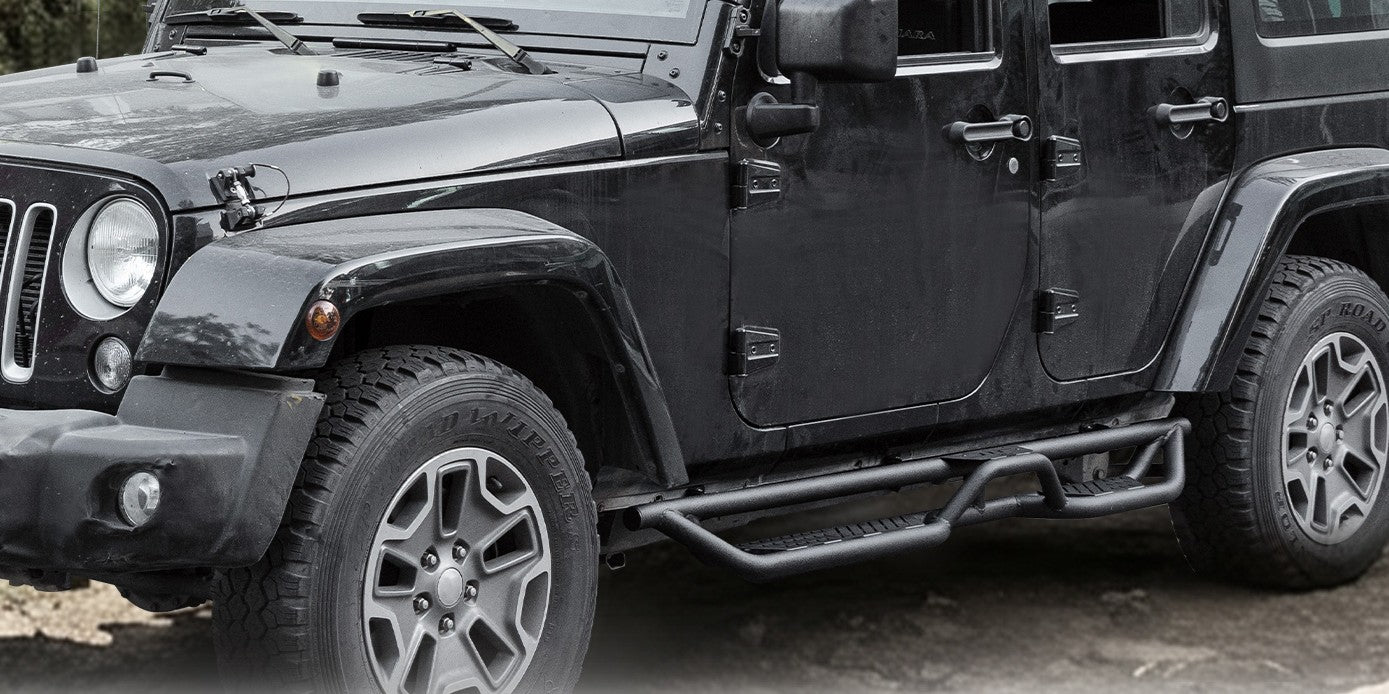
Jeep Wrangler sales keep climbing every year, and the JL platform has only gotten more popular as Jeep rolls out fresh special editions like the Willys 41 and Moab 392 for the 2026 model year. A growing share of these owners are turning to the aftermarket to make their rigs work harder, and running boards remain one of the most requested upgrades on any lifted 4x4. That makes sense once you have tried to climb into a Wrangler sitting on 35-inch tires while holding a cooler, a car seat, or your dog's leash.
If you are shopping for Jeep Wrangler running boards, this guide covers what you actually need to know before you buy, including:
- How to identify your Wrangler generation so you order the correct fit
- What separates a solid set of running boards for Jeep Wrangler models from a flimsy one
- Materials, load capacity, and features worth paying attention to
- What installation actually involves
- Answers to the questions most owners ask before checkout
Why Jeep Wrangler Owners Add Side Steps
Not every Wrangler owner needs side steps, but most benefit from them more than they expect. This section looks at the everyday problems a good set of Jeep Wrangler side steps actually solves.
A stock Wrangler already rides high, and a lift kit or a set of oversized tires pushes that cab height even further out of reach. That extra clearance is exactly what makes a Wrangler capable on the trail, but it turns simple things into a small workout the rest of the week. This is the everyday problem that good running boards for Jeep Wrangler owners are built to solve. Here is where owners feel it most:
- Loading kids into car seats without stepping on the door sill
- Helping an older parent or a passenger with limited mobility get in and out
- Keeping muddy boots and rocker panels from tearing up your pants and shoes
- Reaching gear strapped to a roof rack after a long day on the trail
- Protecting the lower doors and rocker panels from rocks, curbs, and brush
Beyond convenience, a well-built set of Jeep Wrangler side steps also acts as a light layer of body protection. It will not replace a rock slider on a serious rock-crawling build, but it does shield the rocker panel from the everyday scrapes that come with parking lots, gravel roads, and trailheads.
Know Your Wrangler Before You Shop
Before picking any part for your Jeep, you need to be sure which model you actually own. This step matters more for running boards than almost any other accessory since the mounting points are model specific.
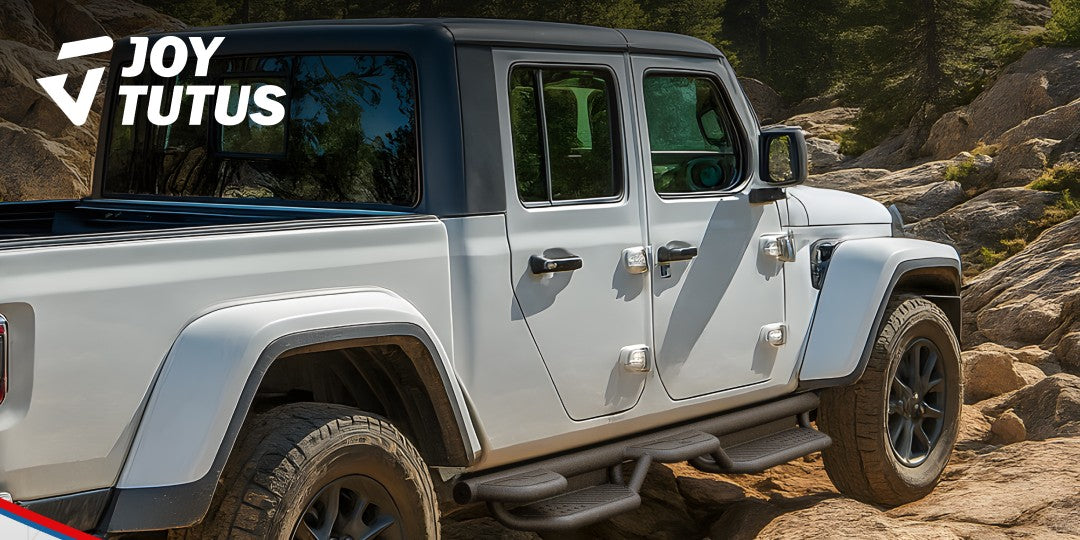
First, confirm you have a Wrangler and not a Gladiator. The Gladiator JT shares the Wrangler's face and doors, but it has a pickup bed, which changes the frame and the mounting hardware entirely. If your Jeep has a bed, you will want to look at Gladiator specific running boards instead.

Next, figure out whether your Wrangler is a JK or a JL. The JL, introduced for 2018, replaced the JK and changed the frame, so the two generations are not interchangeable for bolt-on parts like side steps. If you are not sure which one is parked in your driveway, our guide on Jeep Wrangler JK vs. JL walks through the visual and mechanical differences so you can confirm your model in a couple of minutes.
|
Model |
Years |
Body Style |
|
Wrangler JK |
2007 to 2018 |
SUV, steel body |
|
Wrangler JL |
2018 to present |
SUV, mixed aluminum and steel |
|
Gladiator JT |
2020 to present |
Pickup truck bed |
Most Jeep Wrangler running boards on the market, including ours, are bolt-on parts that rely on factory holes along the frame rail. That is great news for installation time, but it also means a JK board will not line up on a JL, and a Wrangler board will not fit a Gladiator. Confirming your model first saves you a return shipment later, since running boards for Jeep Wrangler JK and JL trims are not interchangeable.
What to Look for in Running Boards for Jeep Wrangler Models
Not all running boards for Jeep Wrangler models are built the same, even when they claim to fit the same Jeep. A few features separate a set that lasts for years from one that rusts, flexes, or rattles loose.
Material and construction. Look for reinforced steel tubing rather than thin stamped sheet metal. Thicker wall tubing resists bending under real weight, which matters if you are stepping on and off the board dozens of times a week.
Load capacity. A 500 to 550 pound rating per side is the standard to look for. That kind of capacity means the board stays solid whether it is a child, an adult, or a bag of gear resting on it.
Step surface and grip. A textured, wrinkle finish surface grips boots even when they are wet or muddy, which is a real safety factor for kids and older passengers climbing in and out.
Corrosion resistance. Off-road driving means salt, mud, and standing water. A quality coating or electrocoat finish helps the board resist rust long after a cheaper, unfinished board starts showing spots.
Fitment and hardware. The best Jeep Wrangler side steps use your Jeep's existing factory holes, so no drilling is required. Check that the listing specifies your exact model and door count before you buy.
JOYTUTUS Running Boards for Wrangler JL and JK
JOYTUTUS builds Jeep Wrangler running boards around the same priorities outlined above: strong construction, safe footing, and straightforward installation. For four-door Wrangler JL owners, the JL running boards (heavy duty model) are built specifically around the JL frame and mounting points. For JK owners, the running boards for Wrangler JK (upgraded model) are sized to match the older JK chassis.
Both models share a 6.3-inch wide step surface with a removable center trim panel, so owners can repaint or customize that section and make their cars differ from others. The dual-layer design also gives you a higher second step, which makes reaching gear on the roof rack a lot easier than balancing on a single narrow bar. Because the tubing is built for real load bearing, these Jeep Wrangler side steps double as a light nerf bar, adding a layer of protection for your rocker panels and lower doors against rocks and curb strikes.

If you want the full picture of the styles available across the Wrangler and Gladiator lineup, our running board options guide breaks down how to choose running boards. Gladiator owners specifically can check the dedicated Jeep Gladiator running boards guide for specific fitment notes.
Installing Your Jeep Wrangler Running Boards
Most owners assume side steps require a trip to the shop, but installing running boards for Jeep Wrangler models is a manageable weekend project for one person.
Since JOYTUTUS running boards mount to existing factory holes, there is no drilling involved. The general process runs like this:
- Lay out all hardware and compare it against the included instructions
- Attach the front, center, and rear brackets loosely to the factory mounting points
- Lift the running board into place and connect it to the brackets
- Adjust for even alignment, then torque every bolt to spec
- Repeat on the opposite side, which typically goes faster once you know the steps
Most installs take around 30 minutes per side with basic hand tools. For a full walkthrough with photos and torque specs, see our step-by-step running board installation guide.
Pair Your Jeep Wrangler Side Steps With the Rest of Your Setup
Jeep Wrangler running boards work best as part of a complete exterior plan rather than a standalone part. Because JOYTUTUS boards are built with strong, load-rated tubing, they can take on a light nerf bar role that pairs naturally with a front or rear bumper for more complete protection around the vehicle. The dual-tier step also makes it easier to reach items strapped to a roof rack, so if you are already outfitting your Wrangler for overlanding or camping trips, side steps and a roof rack tend to get used together on nearly every outing.
Final Thoughts
Jeep Wrangler running boards are a simple upgrade with an outsized effect on how often you actually enjoy driving your Wrangler. They make daily entry and exit easier, help protect your rocker panels on the trail, and give you a stable platform for loading gear onto a roof rack. The only real decision left is matching the board to your exact Wrangler generation, since JK, JL, and Gladiator models all use different mounting points. Once you confirm your model and choose a board with solid steel construction, a real load rating, and a textured non-slip surface, installation is a straightforward bolt-on job you can finish in an afternoon. From there, your Wrangler is ready for whatever the week, or the trail, throws at it.
FAQs
Q1: Will Jeep Wrangler running boards fit my Gladiator too?
A: No. The Gladiator JT has a different frame, so it needs its own running boards, not standard Jeep Wrangler running boards. Check the Gladiator specific guide before ordering.
Q2: Do I need to drill into my Jeep to install running boards?
A: No. Most bolt-on kits, including JOYTUTUS running boards, use your Wrangler's existing factory holes, so no drilling is required.
Q3: How much weight can Jeep Wrangler side steps hold?
A: Quality running boards are typically rated for 500 to 550 pounds per side, which covers passengers, kids, and gear without flexing.
Q4: Do these steps provide real protection, or are they just for looks?
A: Our high-quality running boards for the JK and JL are built with strength in mind. They act as "nerf bars," which means they are designed to absorb impacts and protect your rocker panels and doors from trail debris and rocks, providing legitimate off-road utility.

Leave a comment
All comments are moderated before being published.
This site is protected by hCaptcha and the hCaptcha Privacy Policy and Terms of Service apply.