

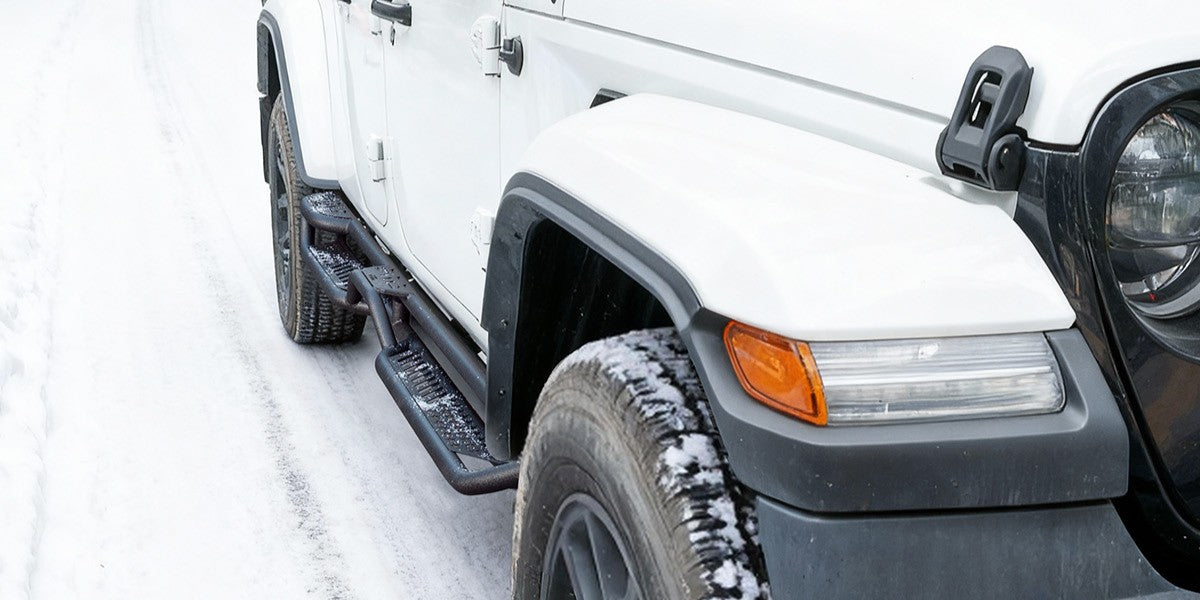
Climbing into a lifted truck is not always graceful. Kids, parents, and anyone carrying gear can use a little help getting up into the cab, and that is exactly the problem running boards were built to solve. The question most truck owners run into next is which type to buy, because the running board market has changed a lot in the last few years.
A growing number of truck and SUV owners are now turning to power running boards instead of the traditional fixed kind. These retractable steps tuck away when you do not need them and swing down the moment a door opens, which means you get a stable step without giving up the ground clearance that makes a truck capable off-road in the first place. At the same time, fixed running boards are still a popular, budget-friendly option that plenty of owners trust.
This article breaks down how power running boards work, compares them against fixed boards across price, convenience, and installation, and helps you figure out which one actually fits the way you use your truck.
Here is what we will cover:
- What power running boards are and how the retractable mechanism works
- The real-world benefits of electric side steps for daily driving and off-roading
- A side-by-side comparison table of power vs fixed running boards
- Installation, maintenance, and what to expect with each type
- Common questions truck owners ask before buying
What Are Power Running Boards?
Power running boards, sometimes called electric running boards or electric side steps, are a motorized version of the classic truck step. Instead of staying bolted in one fixed position, they retract close to the rocker panel when the doors are shut and extend downward automatically once a door opens.
Each board is driven by an electric motor connected to the vehicle's door sensors. When a door swings open, the motor lowers the step into position within a second or two. Close the door, and the board pulls itself back up out of the way. This auto running board setup means the step is only in your way during the brief moment you actually need it, and otherwise it is tucked safely under the body line.
The technology itself is not brand new. Patents for retractable steps go back over two decades, but the parts have gotten smaller, more reliable, and far more affordable in recent years, which is part of why power running boards have become one of the more requested upgrades among truck and SUV owners shopping for running boards today.
Why Drivers Are Switching to Electric Running Boards
Electric running boards solve a few specific frustrations that fixed boards cannot fully address. Below are the main reasons owners upgrade.
They Protect Ground Clearance
Fixed running boards hang permanently below the rocker panels, which can mean a lower point that scrapes on steep driveways, trail obstacles, or parking curbs. Power running boards retract tightly against the body while driving, so the lowest point of your truck stays close to stock. For anyone who tows a trailer in and out of a sloped lot or takes the truck off-road on weekends, that retracted clearance matters.
They Improve Cab Access for Passengers
A retractable step can usually drop lower than a fixed board because it does not need to clear the ground while the truck is moving. That extra drop makes a real difference for kids, older passengers, or anyone getting in and out of a lifted cab several times a day. The board only needs to do its job for the few seconds the door is open.
They Keep a Cleaner Look
Many newer trucks and SUVs are designed with smooth, flowing body lines, and a chunky fixed step can interrupt that look. Because electric side steps disappear when retracted, the factory styling stays intact until the moment you actually need a step.
They Add a Bit of Convenience Tech
Some power running boards include extras like LED courtesy lighting that switches on as the board deploys or a manual override switch for times you want the step to stay down. These small touches are part of why electric running boards are marketed as a premium upgrade rather than a basic accessory.
Power Running Boards vs Fixed Running Boards: A Direct Comparison
Both options have their place, and the right pick really depends on your budget, how you use your truck, and how much maintenance you are willing to take on. The table below lays out the main differences.
|
Feature |
Power Running Boards |
Fixed Running Boards |
|
Ground clearance |
Retracts for near-stock clearance |
Lower point stays fixed at all times |
|
Price range |
Higher upfront cost, often $800 to $1,500+ installed |
More affordable, often $200 to $400 |
|
Installation |
More involved, may need electrical wiring or a control module |
Bolt-on, no drilling on most applications |
|
Moving parts |
Motor, hinges, and sensors that can wear over time |
None, simple steel or aluminum construction |
|
Maintenance |
Occasional motor and sensor checks |
Minimal, mostly cleaning and rust checks |
|
Best for |
Owners who off-road and want a clean look |
Owners who want a budget-friendly, low-maintenance step |
|
Weather reliability |
Can be affected by ice, mud buildup, or sensor faults |
Performs the same in any condition |
Looking at this table, the trade-off is fairly clear. Power running boards win on clearance and styling, but fixed running boards win on price, simplicity, and long-term reliability. If you want a deeper breakdown of how these two styles differ feature by feature, JOYTUTUS has a dedicated comparison guide on power vs. fixed running boards worth reading before you decide.

Installation and Upkeep: What to Expect
Installing a set of running boards is not a small project, but it does not have to be complicated either, especially with fixed boards.
Here is a general overview of what installation looks like for each type:
- Fixed running boards typically bolt directly to factory mounting points under the truck. Most kits include brackets and hardware sized for your specific make and model, and many owners install them at home in under an hour with basic tools.
- Power running boards also bolt to the frame or rocker panel, but they require an additional step of connecting the motor to the vehicle's electrical system, either by tapping into the door wiring or plugging into the OBDII port with a control module.
- Both types should be tightened and rechecked after the first few weeks of driving, since vibration over rough roads can loosen hardware on any bolt-on accessory.
If you want a closer walkthrough before you start turning wrenches, the JOYTUTUS guide on how to install running boards covers the process step by step.
Choosing the Right Auto Running Boards for Your Truck
There is no single right answer here. A few quick questions can help point you in the right direction:
- Do you regularly drive off-road or in places where clearance matters? Power running boards are likely worth the investment.
- Are you upgrading mainly for everyday convenience and door protection on a budget? Fixed running boards deliver most of the same step-up benefit for a fraction of the price.
- Do you want the lowest-maintenance option possible? Fixed boards have no motors or sensors to worry about down the road.
- Is a clean, factory-style look a priority? Retractable boards stay out of sight until you need them.
If you are still weighing the basics of what running boards actually do and how to size them for your vehicle, the JOYTUTUS guide on what are running boards is a good starting point before comparing specific products in the JOYTUTUS running boards collection.
Final Thoughts
Power running boards and fixed running boards both solve the same basic problem of making a tall truck easier to climb into, but they go about it in different ways. Electric running boards offer better clearance, a cleaner look, and added convenience, while fixed running boards offer simplicity, durability, and a lower price tag. Think about how you actually use your truck, whether that is weekend trail runs, daily commuting, or hauling family and gear, and let that guide your decision.
FAQs
Q1: Do power running boards work when the truck battery is low?
A: Power running boards rely on the vehicle's electrical system, so a very weak battery can cause slower deployment or prevent the boards from moving at all. Most kits include a manual override switch so you can still use the step if this happens.
Q2: Will power running boards drain my battery over time?
A: The motors only draw power briefly when the boards deploy or retract, so the impact on a healthy battery is minimal under normal use.
Q3: How long do electric running boards usually last?
A: With regular cleaning and occasional checks on the motor and hinge points, electric running boards can last for years, though the moving components generally require more long-term attention than a fixed board.
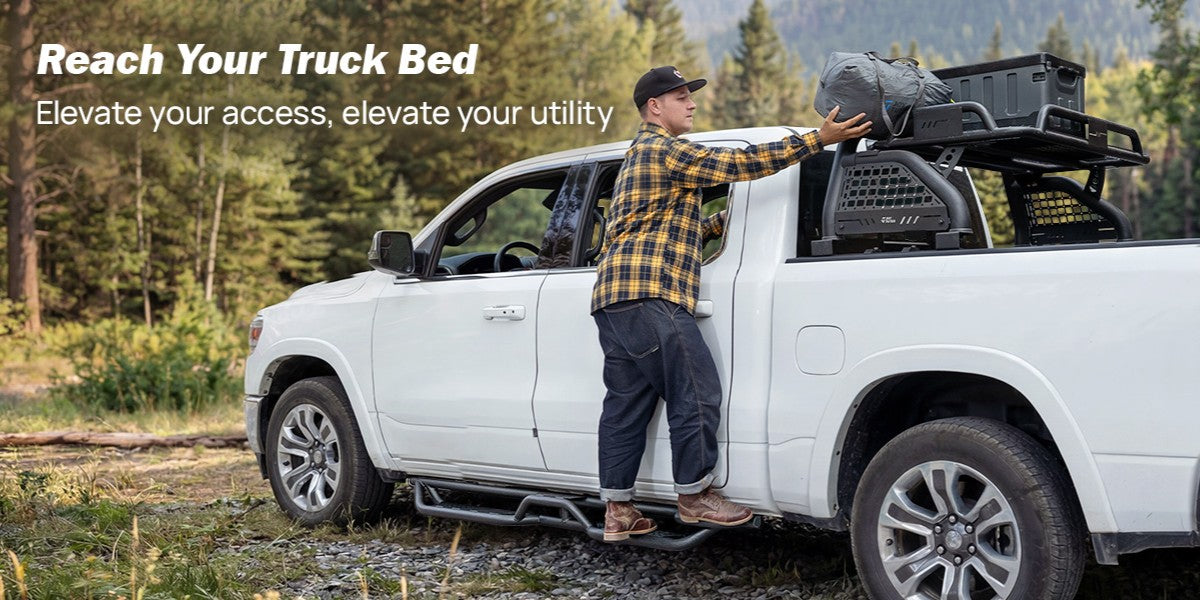

Leave a comment
All comments are moderated before being published.
This site is protected by hCaptcha and the hCaptcha Privacy Policy and Terms of Service apply.