

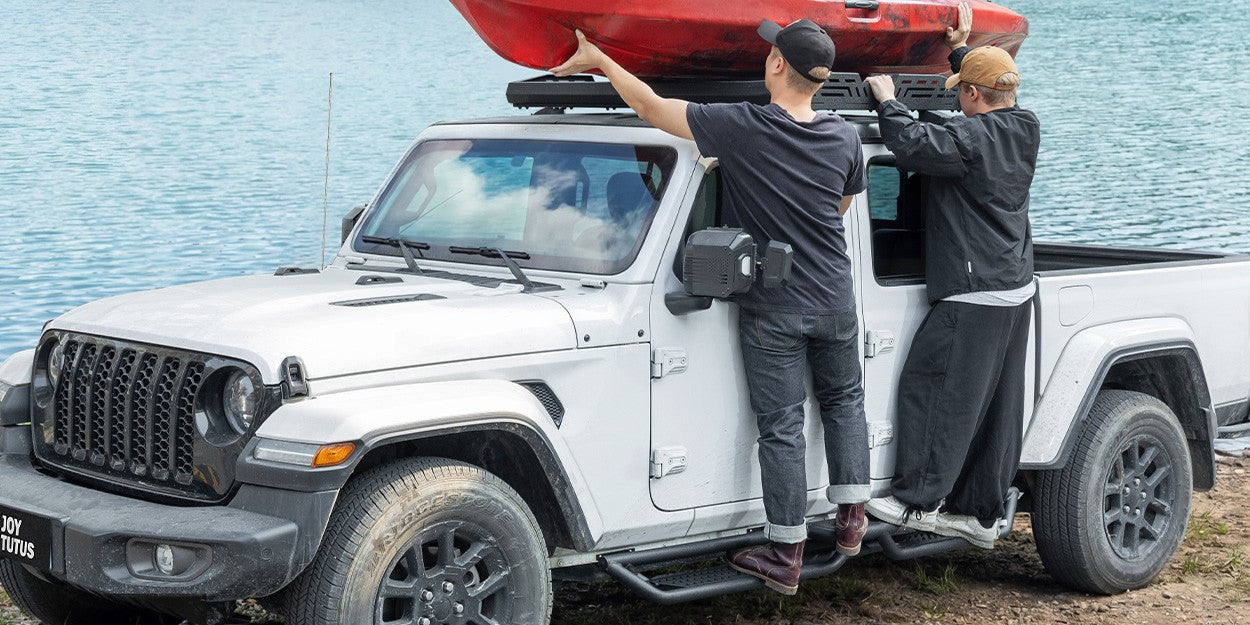
If you drive a lifted truck or a full-size SUV, you already know the routine — grab the door handle, pull yourself up, hope your passengers can manage on their own. It is a small friction point, but it happens every single trip. Running boards solve that problem without complicating anything else.
More truck and SUV owners are adding aftermarket running boards than ever before. The North American automotive accessories segment continues to grow through 2026, and side entry steps consistently rank among the most popular upgrades for pickup owners. Part of the reason is practical — modern trucks sit higher than they did a generation ago. Part of it is that the options have improved dramatically in terms of fit, finish, and load capacity.
If you are the one who is considering running boards, this guide may give you a general thought. In this guide, you will learn:
- What running boards are and how they differ from nerf bars and side steps
- The two main types of running boards: fixed and power
- Which materials hold up best over time
- How cab-length and wheel-to-wheel options compare
- How to install running boards on a Jeep Gladiator JT step by step
- The key factors to weigh before you buy
What Are Running Boards, Exactly?
Running boards are flat, horizontal steps mounted along the lower sides of a truck or SUV, directly beneath the doors. They sit between the cab and the ground, giving passengers a raised platform to step onto before climbing in or out. On most vehicles, a running board drops down roughly three inches from the pinch weld, turning what would otherwise be a stretch into a confident, easy step.
People often use "running boards," "nerf bars," and "side steps" interchangeably. They are related, but each one is a little different.
Running Boards vs. Nerf Bars vs. Side Steps
Running boards are wide, flat platforms — typically four inches or more across — that run the full length of the cab. Nerf bars are tubular and are more common on larger trucks. They feature step pads at each door opening rather than one continuous surface. Side steps tend to be narrower and may cover just one or two door positions rather than the full cab length.
For families with kids, older passengers, or anyone loading and unloading gear on a regular basis, full running boards provide the most surface area and the most reliable support underfoot.
Types of Running Boards
Running boards break down into two main categories. Knowing which one suits your day-to-day life and driving style makes the rest of the buying decision much easier.
Fixed Running Boards
Fixed running boards bolt permanently to the vehicle's frame or factory mounting points. They stay in the same position all the time — whether you are parked at a trailhead or pulling out of the driveway. There are no sensors, no motors, and no electrical connections to worry about. Installation is usually a straightforward bolt-on process, and maintenance is mostly limited to cleaning.
The one trade-off worth knowing: because fixed boards hang down at all times, they sit lower than the rocker panel and can make contact with rocks or uneven terrain during aggressive off-road use. For drivers who mostly stick to paved or light gravel roads, that is rarely a problem.
Power (Retractable) Running Boards
Power running boards use a small electric motor to deploy the step when a door is opened and retract it against the body when the door closes. The board can drop as low as ten inches from the ground, which is a meaningful difference for children, elderly passengers, or anyone with limited mobility.
When retracted, power boards do not affect ground clearance at all. That makes them a strong choice for lifted trucks used on technical trails. They do come at a higher price and involve a more involved installation. For a side-by-side look at how the two styles compare in real-world use, see the JOYTUTUS guide on power vs. fixed running boards.
Running Board Materials: How They Stack Up
The material your running boards are made from affects weight, how well they hold up to rust, and how they look over time. Here is a quick comparison of the four most common options:
|
Material |
Weight |
Rust Resistance |
Typical Finish |
Best For |
|
Aluminum |
Light |
Excellent |
Polished or anodized |
Daily drivers, weight-sensitive builds |
|
Carbon Steel |
Heavy |
Moderate (needs coating) |
Black powder coat / wrinkle |
Heavy-duty use, high load capacity |
|
Stainless Steel |
Medium |
Very good |
Polished, chrome-like |
Style-focused builds, wet climates |
|
Fiberglass |
Light |
Excellent |
Paintable to OEM color |
Custom color-matched builds |
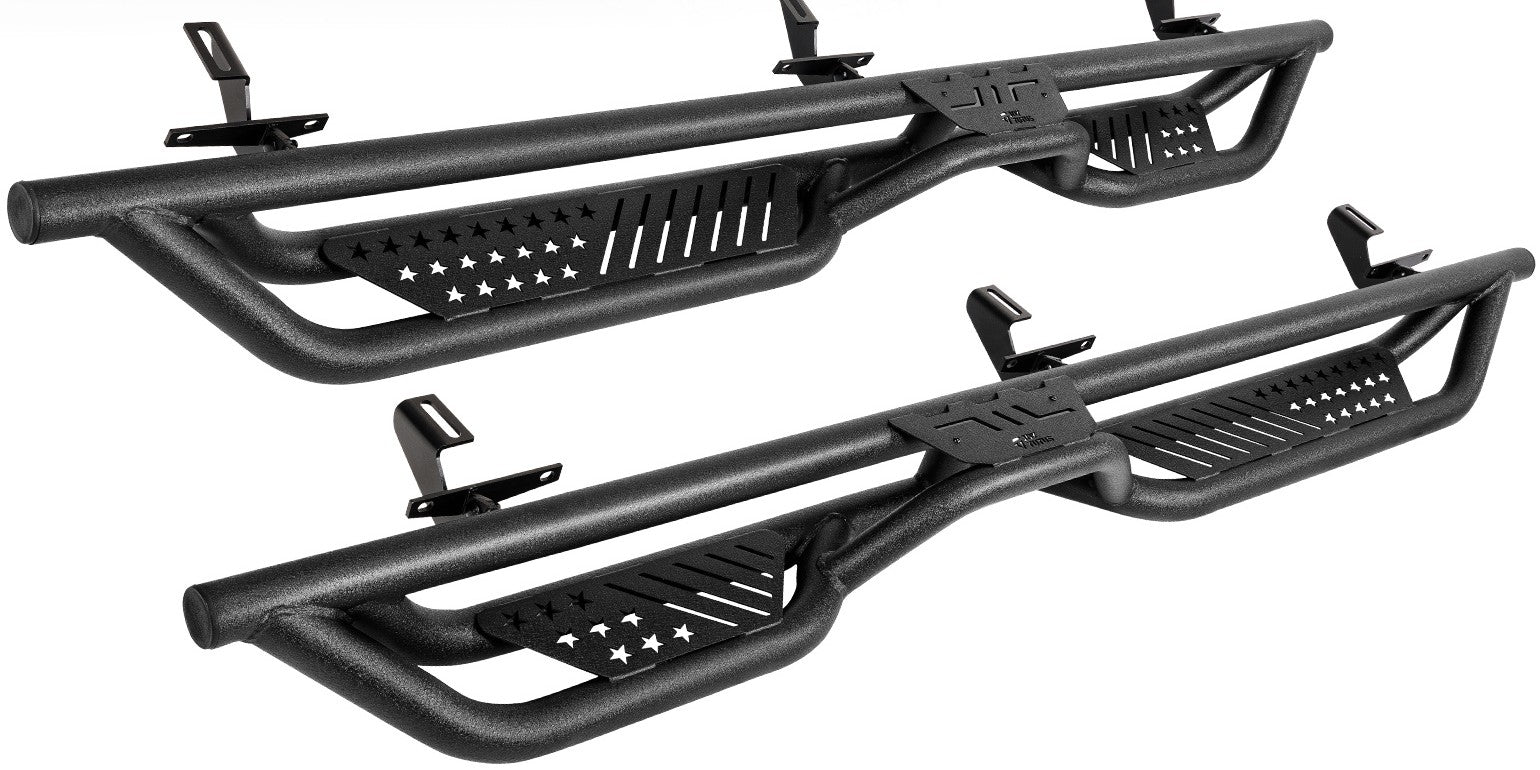
Aluminum boards are naturally rust-resistant and add minimal weight to the vehicle, making them a reliable all-around option. Carbon steel boards are stronger and can handle more load before flexing — JOYTUTUS running boards for the Jeep Gladiator JT, for example, are built from reinforced carbon steel rated at 550 lbs of capacity per step. To fight corrosion, the running boards go through an electrocoating process and receive a black river textured powder coat finish. Stainless steel holds up especially well in wetter climates and comes with a polished look closer to chrome. Fiberglass is less common but appeals to owners who want to paint the boards to match their vehicle's factory color code exactly.

Running Board Length: Cab Length vs. Wheel-to-Wheel
After material, length is one of the most practical decisions you will make when shopping for running boards.
Cab-length running boards cover the area directly beneath the cab doors and nothing more. On a two-door cab, that is one step per side. On an extended or crew cab, you get two steps per side. Cab-length boards cost less than wheel-to-wheel options and are the right call for most daily drivers who do not need bed access from the side.
Wheel-to-wheel running boards extend past the rear of the cab and reach toward the rear wheel well. That extra length provides a step for accessing the truck bed from the side, which is genuinely useful for contractors, overlanders with loaded cargo, and anyone who regularly reaches into the bed. If your truck carries a toolbox, wheel-to-wheel boards make it much easier to work with.
As a general rule: if you rarely access the truck bed from the side, cab-length boards are the better value. If you are in and out of the bed constantly, wheel-to-wheel boards earn their extra cost.
JOYTUTUS Running Boards: Built for the Trail and the Everyday Drive
The JOYTUTUS running boards lineup is built for truck and SUV owners who want serious durability without a complicated install or an inflated price tag.
A few things that set JOYTUTUS running boards apart from the crowd:
- OEM bolt-on fitment: Boards are engineered for specific makes and models and bolt directly into factory mounting points. No drilling, no guesswork, no modifications needed.
- Dual-tier step design: Two raised step surfaces give passengers a lower entry step and an upper step for reaching the roof rack or truck bed.
- 550 lb load capacity per step: Reinforced carbon steel construction handles adults, kids, and fully loaded gear without flex or wobble.
- Three-layer corrosion protection: Electrocoating plus a textured black wrinkle topcoat keeps rust away through mud, salt, and weather abuse.
Browse the full JOYTUTUS running boards collection and filter by your vehicle to find the right fit. For more context on what separates a good set from a great one, the best truck running boards guide is a useful starting point.
How to Install Running Boards
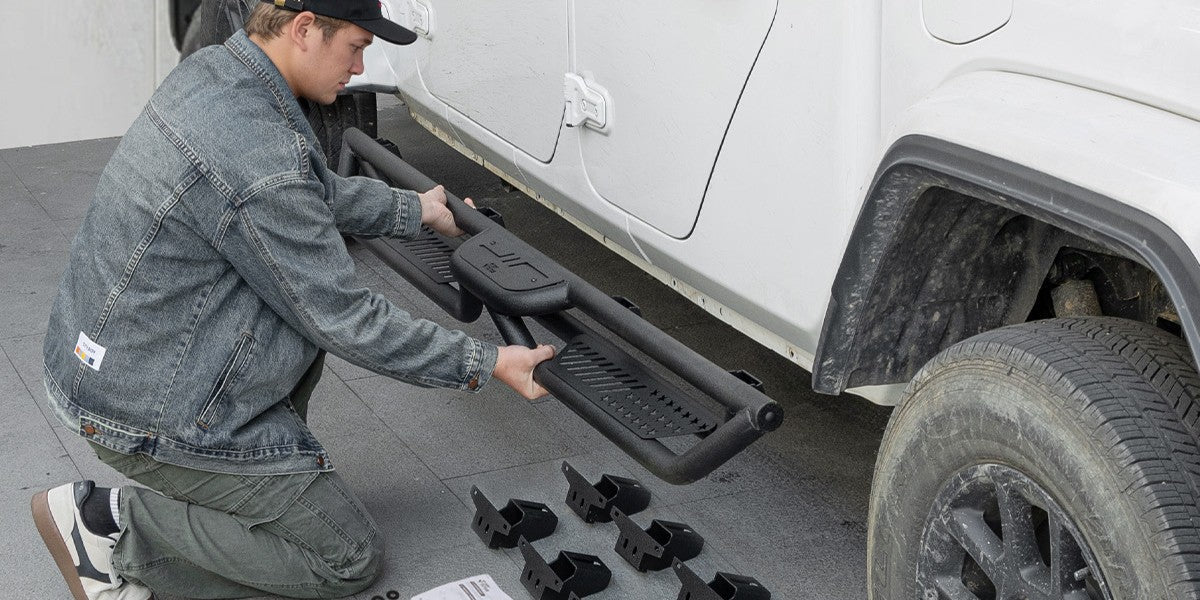
Installing running boards is a realistic DIY project for most truck owners. Let's take the JOYTUTUS running boards designed for the Jeep Gladiator JT as an example.

What you will need:
- socket wrenches
- Hex key
- The running boards, and all included hardware
Step-by-step installation:
Step 1: Remove Existing Pedal or Rock Rails (if equipped)
- If a factory side step is installed, remove it first.
- If factory rock rails are present, remove the M8 hex bolts and M6 hex nuts from the inner rocker panel, then pull off the rock rail. (The new step bars cannot coexist with factory rock rails.)
- If nothing is installed, skip straight to Step 2.
Step 2: Locate & Prep Mounting Points
- Find the 4 mounting positions along the rocker panel on one side.
- Clean off any dirt or sealant around each mounting hole.
Step 3: Attach Connectors (Do Not Tighten Yet)
Using M8×30 hex head bolts, flat washers, spring washers, and M6 carriage bolts with nuts, loosely bolt the 4 connectors to the vehicle's rocker panel. Leave everything finger-tight for now so you can adjust alignment.
Step 4: Mount the Step Bar
Slide the step bar onto the connectors and secure it using M8×25 round-head hex screws, M8 hex nuts, and Φ8 flat + spring washers (×8 per side). Once aligned, tighten everything fully.
Step 5: Repeat for the Other Side
Follow Steps 2–4 to install the second step bar on the opposite side.
Optional: Customize the Decorative Panel
- Remove the decorative trim piece by taking out its screw and nut.
- Spray paint it your desired color with your own paint.
- Reinstall once dry.
For more details about the installation, please see our running board installation guide or our installation video as follows:
Key Points to Keep in Mind Before You Buy
A few questions worth answering before you commit to a set of running boards:
- Does it fit your exact vehicle? Always verify the boards are designed for your specific make, model, year, and cab configuration. A proper OEM fit means no drilling and a cleaner look from every angle.
- How do you use your truck? Daily highway driving is a strong case for fixed boards. Frequent off-road or trail use may call for power retractable boards that protect ground clearance when you need it most.
- What loads will the boards carry? If you regularly carry heavy gear or have larger passengers, look for a board rated to at least 500 lbs per step.
- Where do you live and drive? In climates with road salt, heavy rain, or mud, prioritize electrocoated steel or aluminum with a sealed, rust-resistant finish.
- How grippy is the step surface? Deeply textured anti-slip treads are worth the attention, especially in wet or muddy conditions where a smooth surface can become dangerous fast.
Final Conclusion
Running boards are one of those upgrades that quietly improves every interaction you have with your truck. They make entry and exit easier for everyone, protect the rocker panels from chips and dings, help keep mud and debris from tracking into the cab, and give your vehicle a more complete, intentional appearance. Whether you are outfitting a daily commuter or a weekend overlanding rig, a good set of running boards earns its place quickly and holds it for years.
If you are ready to take the next step, JOYTUTUS offers a wide lineup of running boards built to fit specific vehicles, handle real-world loads, and hold up through years of daily and off-road use. Explore the JOYTUTUS running boards and find the pair that fits your truck, your passengers, and your adventures.

Leave a comment
All comments are moderated before being published.
This site is protected by hCaptcha and the hCaptcha Privacy Policy and Terms of Service apply.