

Truck and SUV owners know the struggle: climbing in and out of a lifted vehicle, helping kids into the back seat, or hauling gear into the cab is a daily inconvenience. That is why so many drivers start looking into side steps and running boards as their next upgrade.
In 2026, the truck accessories market hit a record high, with step bars and running boards among the top-selling add-ons for pickup trucks and SUVs. More owners are personalizing their vehicles for both daily driving and weekend overlanding, and a well-chosen side step or running board can make a real difference in comfort, safety, and looks.
But the debate around running boards vs. side steps is a real one. Both serve a similar purpose, yet they function and feel very differently once installed. This guide breaks down exactly what each product is, where each one shines, and how to pick the right option for your specific situation.
Here is what you will find in this article:
- A clear definition of running boards and side steps
- The advantages and disadvantages of each
- A side-by-side comparison table
- Practical tips for choosing based on your vehicle and lifestyle
- The Joytutus 2-in-1 solution for owners who want both in one package
What Is a Running Board?
A running board is a wide, flat platform that runs along the lower side of a truck or SUV, spanning the length of the cab from the front door to the rear door. Think of it as a built-in shelf that sits just below the door sills, giving passengers a broad and stable surface to step onto when entering or exiting the vehicle.
Running boards were originally designed for tall utility vehicles where the gap between the ground and the cab floor was significant. Today, they remain one of the most practical accessories you can add to a pickup truck or SUV.
What Makes Running Boards a Popular Choice
Running boards typically sit flush against the body of the vehicle, providing a cleaner, more integrated look compared to tubular steps. Their flat, wide surface covers the full length of the cabin, making entry easier for multiple passengers at once.
Key characteristics of a running board include:
- A flat, continuous stepping platform along the entire cab length
- A surface wide enough for both feet to land comfortably
- Anti-slip tread or textured pads for safe footing in wet conditions
- A lower profile that blends with the body lines of the vehicle
- Added protection for the lower rocker panel and side doors against road debris
If you want to understand more about running board types and what they are made of, Joytutus has a detailed guide on what running boards are and how they work. If you want to know how to install running boards, see our guide!
What Is a Side Step?
A side step, also known as a nerf bar or step bar, is a tubular bar mounted beneath the doors of a truck or SUV. Instead of a flat, continuous platform, side steps use a round or oval tube with individual rubber or textured step pads positioned at each door opening.
Side steps are more compact and sit further from the vehicle body than running boards. That distance, combined with the tubular design, gives them a rugged, sporty appearance that many truck owners favor, especially for off-road builds.
What Makes Side Steps Stand Out
Side steps are typically lighter and narrower than running boards. Because they mount lower and away from the rocker panel, they preserve more of the vehicle's ground clearance on one hand, but they can also be more exposed to trail debris on the other.
Key characteristics of a side step include the following:
- A tubular round or oval bar shape with individual step pads
- A sportier, more aggressive visual profile
- Lighter overall weight compared to running board panels
- Greater customization in finish: chrome, powder coat, polished, or textured
- Better ground clearance than a full-length running board in some configurations
Running Boards vs Side Steps: Key Differences
The table below summarizes the core differences between a running board and a side step to help you compare both options side by side.
|
Feature |
Running Board |
Side Step |
|
Shape |
Wide, flat platform |
Tubular bar |
|
Step Surface |
Continuous, full-length |
Individual pads per door |
|
Ground Clearance Impact |
Slight reduction |
Minimal impact |
|
Vehicle Side Protection |
Yes, shields rocker panel |
Limited |
|
Best For |
Families, daily drivers |
Off-road, sporty builds |
|
Aesthetic |
Sleek, integrated look |
Rugged, aggressive look |
|
Typical Material |
Steel, aluminum, ABS |
Steel, aluminum, stainless |
|
Weight |
Generally heavier |
Generally lighter |
|
Ease of Entry |
High (wide surface) |
Moderate (narrower step) |
Pros and Cons of Running Boards
Running boards are a strong choice when you want maximum comfort and convenience for regular passengers, but they do come with trade-offs worth knowing before you buy.
Pros:
- Wide, stable stepping surface that is easy to land on, especially for children and older adults
- Covers the full cab length so both front and rear passengers use the same board
- Shields the lower side doors and rocker panels from mud, gravel, and road spray
- Sits close to the vehicle body for a factory-integrated appearance
- Available in fixed and power-retractable versions for lifted builds
Cons:
- Can reduce ground clearance slightly due to the wider profile
- Adds more weight to the vehicle compared to a tubular side step
- Not ideal for extreme off-road situations where low-hanging obstacles are a risk
- Typically costs more than a basic side step setup
For a deeper look at your options across different running board styles, browse the Joytutus running boards collection to see how they compare in design and capacity.
Pros and Cons of Side Steps
Side steps appeal to truck owners who prioritize a rugged look, lighter weight, and off-road readiness. But they are not without their own limitations.
Pros:
- Compact and lightweight, with a minimal footprint under the vehicle
- Adds a sporty, aggressive look that suits lifted and off-road builds
- Easier to clean due to tubular construction and open design
- Available in a wide range of finishes and materials
- Less likely to snag on trail obstacles than a wide flat board
Cons:
- Narrower step pads require more precise footing when entering the vehicle
- Does not offer the same level of side door and rocker panel protection as a running board
- Step pads are positioned only at door openings, with gaps in between
- Can feel less stable underfoot for passengers who need extra support
How to Choose Between a Running Board and a Side Step
The right answer in the running boards vs. side steps debate depends on three practical factors: who uses your truck, how you drive it, and what your vehicle's clearance situation looks like.
Think About Who Rides in Your Truck
If you regularly have children, older family members, or anyone who might find it difficult to climb into a tall cab, a running board is the safer, more comfortable option. The wide, flat platform gives passengers room to step up with confidence and stability.
Side steps work well for drivers who mostly ride alone or with able-bodied passengers who are comfortable with a narrower step.
Think About How You Drive
Daily commuters and those who spend most of their time on paved roads will benefit most from a running board. The added convenience and side protection make every trip in and out of the vehicle easier.
If you spend significant time on trails, in rocky terrain, or in tight off-road situations, a side step keeps more clearance beneath your truck and is less likely to catch on uneven ground. To learn more about the difference between power and fixed boards for off-road use, the Joytutus guide on power vs. fixed running boards is a useful starting point.
Think About Your Vehicle's Clearance
Standard trucks and SUVs on factory suspension work well with either option. However, if your vehicle is lifted or sits unusually high off the ground, a running board with a dual-tier step design becomes especially valuable because the extra step height helps bridge that gap. Trucks on stock suspension that sit lower may actually find side steps sufficient for easy entry without any added width.

Why Not Get the Best of Both? The Joytutus 2-in-1 Running Board
Here is where things get interesting. For truck and SUV owners who do not want to choose between the accessibility of a running board and the rugged clearance-friendly design of a side step, Joytutus has built a solution that handles both jobs at once.
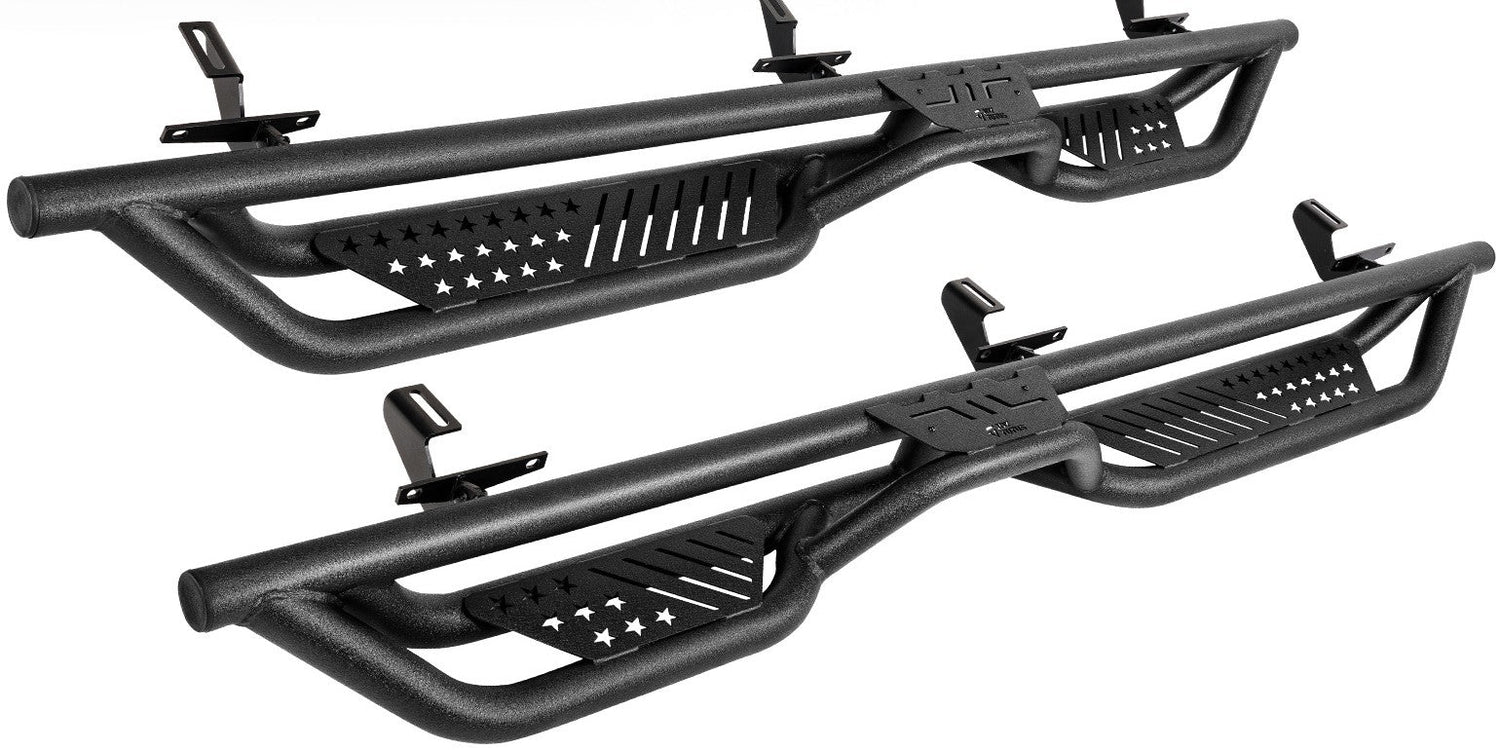
The Joytutus running boards feature a two-tier side step design. The lower step functions like a traditional side step but is wider than a traditional one, giving off-road-ready access when the ground is uneven or muddy. The upper tier provides the additional platform that families and frequent passengers rely on for confident entry and exit. In that sense, it is a genuine 2-in-1 product rather than a compromise between two designs.
Beyond the dual-step function, these boards are also built to protect the side of your vehicle. The wide profile guards your lower doors and rocker panels from trail debris, gravel kick-up, and parking lot scuffs, an added layer of protection that a basic tubular side step cannot match.
What Sets Joytutus Running Boards Apart
Joytutus has built a reputation for delivering automotive travel products that hold up under real-world conditions. Their running boards reflect that commitment in several specific ways:
- 3-layer coating system: powder coat followed by an electrocoating and a durable carbon steel finish means these boards resist rust, scratches, and snow across seasons
- Textured anti-slip step pads: Deeply textured tread surfaces keep your footing secure in rain, snow, and mud
- 550 lb load capacity per side: Reinforced carbon steel construction supports up to 550 lbs per board, enough for two adults with full gear
- No-drill bolt-on installation: Precision-engineered brackets align with factory mounting points, so installation is clean and straightforward with no modifications to your truck's frame
- American flag design option: Joytutus side steps also come with a distinctive American flag design, and the removable center trim allows you to personalize the look further with DIY customization

Whether you drive a Chevy Silverado, GMC Sierra, Dodge Ram, Jeep Wrangler, or another popular truck or SUV, Joytutus has vehicle-specific running boards engineered to fit. You can explore the full range of options on the Joytutus running boards.
Conclusion
The side steps vs. running boards decision is not about which product is objectively better. It comes down to how you use your truck and who rides in it. Running boards offer the widest stepping surface, the most side protection, and the easiest entry for all passengers. Side steps deliver a cleaner look, better ground clearance, and a more rugged aesthetic that suits active off-road use.
For most truck and SUV owners, the Joytutus 2-in-1 dual-tier running board eliminates the need to choose. With two-step access, a durable 3-layer finish, 550 lb capacity, and protection for your side doors, it brings the best qualities of both a running board and a side step into a single, well-engineered package. Browse Joytutus running boards collection and find the right fit for your vehicle today.


Leave a comment
All comments are moderated before being published.
This site is protected by hCaptcha and the hCaptcha Privacy Policy and Terms of Service apply.