

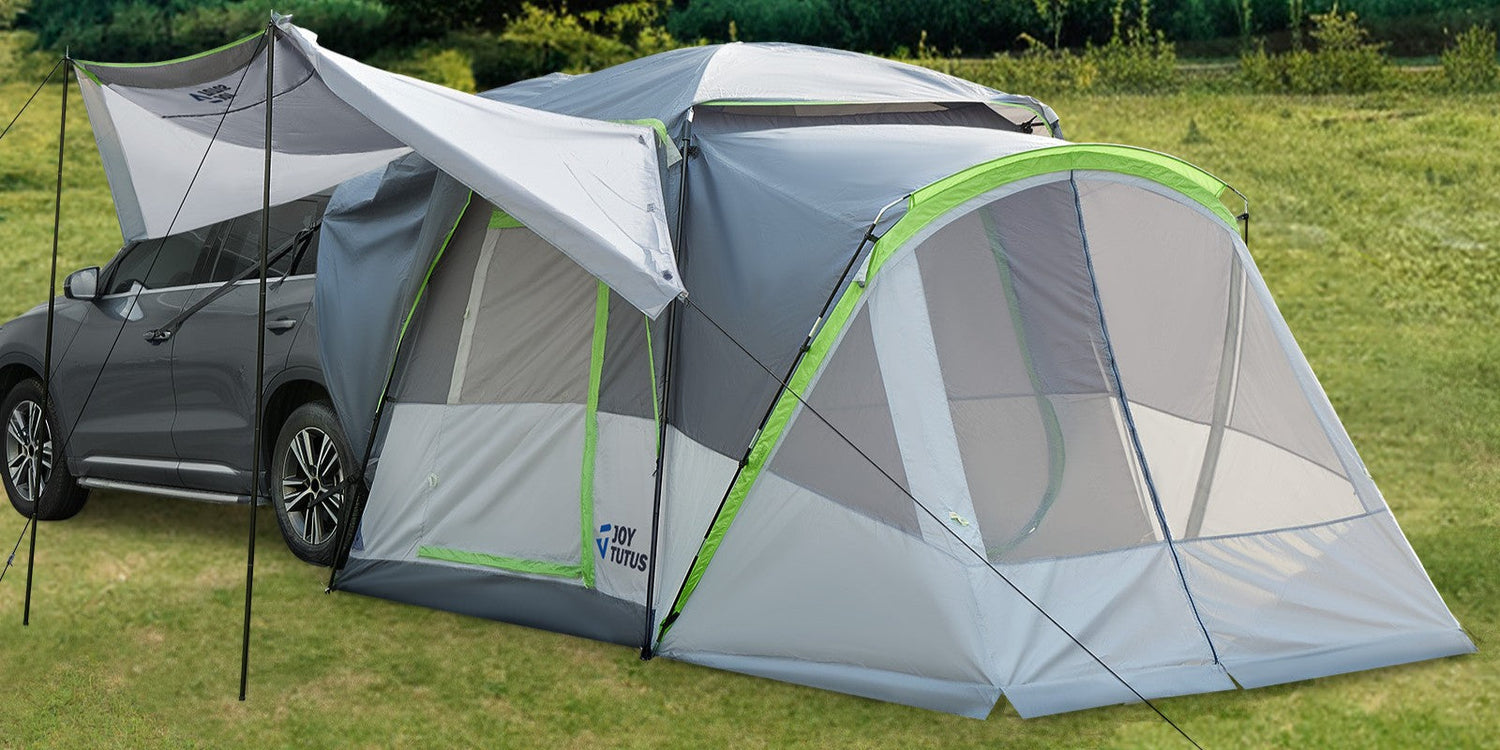
SUV camping keeps growing every season, and outdoor gear reports for 2026 point to the same trend: more families and weekend campers are turning their SUV, CUV, or minivan into a mobile basecamp instead of hauling a separate ground tent. Interest in SUV tent camping has climbed alongside the broader overlanding boom, as more drivers look for a setup that is faster to pitch than a traditional tent. If you already own an SUV, an SUV tent is often the easiest way to upgrade your trips without buying a new vehicle or a rooftop camper van.
But walk into any outdoor store or scroll through a few listings online, and you will notice SUV tents come in several shapes, sizes, and mounting styles. Picking the wrong one means wasted money and a frustrating night at the campsite. This guide breaks down everything a first-time buyer needs to know before choosing a tent for SUV camping.
In our guide, you will know all consideration factors when choosing an SUV tent:
- The three main types of SUV tents and how each one mounts to your vehicle
- The materials that separate a durable tent from one that leaks after one trip
- A simple step-by-step process for picking the right tent for your SUV, CUV, or minivan
- Two recommended SUV tents from JOYTUTUS, one for tailgate camping and one for the roof
- Answers to the most common questions SUV owners ask before buying
What Is an SUV Tent, and Why Are More Campers Choosing One?
An SUV tent is any tent designed to work with your vehicle instead of sitting on its own in a field. Some connect directly to the rear hatch, some sit on the roof, and some are simply large enough to double as an SUV trunk tent when you fold the back seats down.
The appeal is simple. You get more covered space than a standard tent, faster setup than pitching stakes in the dark, and a shorter walk between your sleeping bag and your gear. For families, that convenience matters. For overlanders, it means one less thing to strap to the roof rack. Whether you drive a midsize SUV, a crossover, or a minivan, there is an SUV camping tent built for your setup.
The 3 Main Types of SUV Tents
Before buying, it helps to know how SUV tents are actually categorized in the market. Nearly every model on the market today falls into one of three groups based on where and how it mounts to your vehicle.
SUV Tailgate Tents
An SUV tailgate tent attaches to the rear hatch or trunk of your vehicle, creating a sealed room between your car and the outdoors. Most tailgate tents can also be staked out and used as a freestanding SUV tent camper without the vehicle attached, which makes them one of the more flexible options on this list. They are usually the fastest to set up and the most budget-friendly place to start.

Standalone SUV Tents
Standalone tents are not physically attached to the vehicle at all. They are pitched next to your SUV or minivan like a traditional ground tent, but sized and shaped to match the footprint of a car camping setup. This style works well if you want the option to park somewhere the tailgate cannot reach or if you are looking for a simple minivan tent that does not rely on a specific hatch design.
SUV Roof Tents
A roof tent, or SUV roof tent, mounts on top of your vehicle and folds out for sleeping above the ground. This keeps you off wet or uneven terrain and away from ground-level bugs. This type of tent is usually pre-installed on your car roof before departure. It is very heavy, and sometimes you need 2-4 people to help your installation. Most roof tents require a roof rack rated for the tent's weight, so check your vehicle's roof load capacity and add crossbars before ordering one.

|
Tent Type |
Where It Mounts |
Setup Time |
Best For |
|
Tailgate Tent |
Rear hatch, can detach to standalone |
5 to 15 minutes |
Families, first-time buyers, budget setups |
|
Standalone Tent |
Ground, next to the vehicle |
10 to 20 minutes |
Flexible parking, backup shelter, extra guests |
|
Roof Tent |
Vehicle roof, needs a roof rack |
Under 1 to 15 minutes |
Overlanding, uneven ground, elevated sleeping |
What Materials Make a Good SUV Tent?
Not every tent labeled "waterproof" performs the same way once the rain actually starts. The fabric and coating are what decide whether you stay dry or wake up in a puddle.
Look for these details before you buy:
- Polyester oxford fabric (commonly 150D to 210D): a tight weave that resists tearing and abrasion better than thin nylon.
- PU waterproof coating, rated in millimeters (PU2000 for tailgate tents, PU5000 or higher for roof tents that face more direct weather): the higher the number, the more water pressure the fabric can hold back before it seeps through.
- Aluminum or steel poles: aluminum keeps the tent lighter, while steel frames add extra wind stability for exposed campsites.
- Mesh windows and doors: needed for airflow, since poor ventilation leads to condensation building up inside the tent overnight.
- A sealed or waterproof floor: prevents ground moisture from soaking through, especially important for tailgate and standalone tents pitched directly on grass or dirt.
How to Choose the Right SUV Tent for Your Vehicle
Use this simple process to narrow down your options before checkout.
- Measure your vehicle's rear opening if you are considering a tailgate tent, since fit varies between SUVs, CUVs, and minivans.
- Check your roof rack's weight rating if you want a roof tent, and add crossbars if your vehicle does not already have them.
- Decide how many people need to sleep inside, then compare that number against the tent's listed capacity, not just its floor size.
- Confirm the waterproof rating matches the climate you camp in most often.
- Think about how often you will detach the tent from your car. If you want flexibility, a dual-use tailgate design that also works as a standalone tent is usually the safer buy.
- Set a budget range, since tailgate tents are generally the most affordable entry point, while hard shell roof tents sit at a higher price due to their aluminum construction.
Our Top SUV Tent Picks from JOYTUTUS
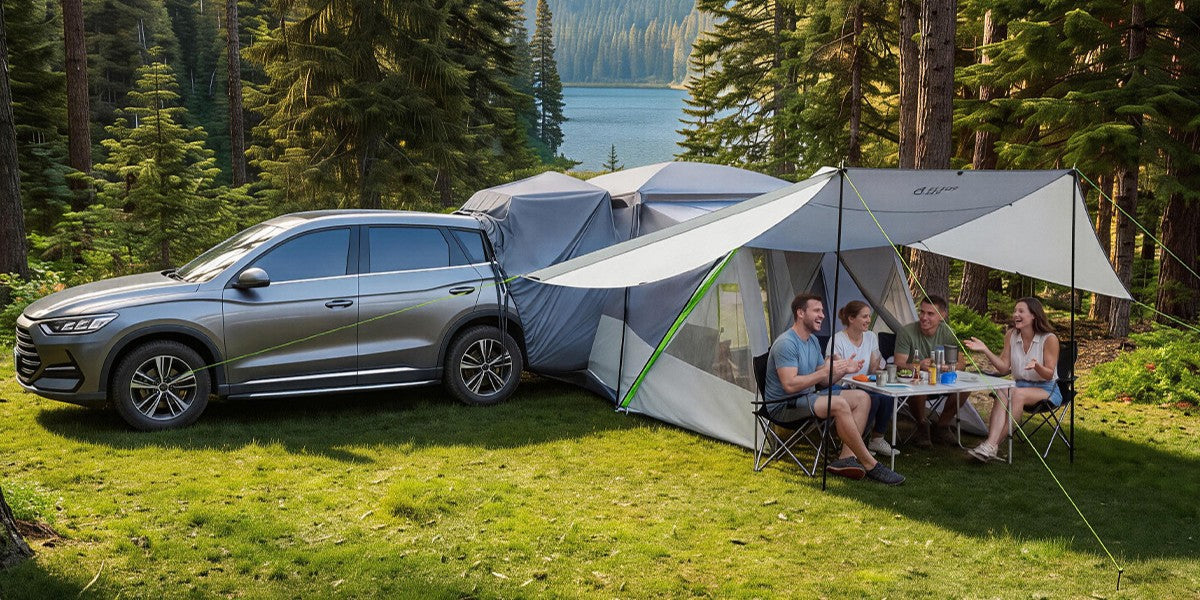
If you want a tailgate setup, the SUV Tent with Screen Porch and Awning is built with 210D polyester oxford and a PU2000 waterproof coating, giving it roughly 60% more interior space than a standard tailgate design. It includes a screened porch plus a 3-sided awning for shade, fits up to five adults, and offers a 7-foot center height so you are not hunched over while moving around inside.
If you are ready to go elevated, the Overland Hard Shell Aluminum Rooftop Tent is built from aircraft-grade aluminum alloy and opens in under a minute with a one-touch setup system. It carries a PU5000 waterproof rating, Level 6 wind and snow resistance, three mesh windows for airflow, and a built-in LED strip light with a skyview window for stargazing before you fall asleep. Keep in mind that roof tents like this one need a roof rack rated for the added weight, so confirm your crossbars before installing.
Both tents are part of JOYTUTUS's full SUV tent collection, where you can compare sizes and fitment by vehicle type. For a deeper look at how tailgate and roof styles differ, our SUV tailgate tent guide and SUV roof tent guide go into more detail on each style, and our car camping tent options article shares more tents with additional features.
Conclusion
Choosing the right SUV tent comes down to how you camp, not just how the tent looks in photos. If you want an affordable, flexible option that doubles as a standalone shelter, a tailgate tent is the easier starting point. If you camp on uneven or wet ground often and your vehicle can support the weight, a roof tent gives you a drier, more elevated night's sleep. Either way, check the fabric, waterproof rating, and fitment before you buy, since those three details decide how the tent actually performs once you are miles from home. Browse the full JOYTUTUS SUV tent lineup to compare tailgate and roof models side by side, or visit JOYTUTUS to see the rest of the overlanding and camping accessories built for SUV owners.
FAQs
Q1: Do I need a roof rack for an SUV roof tent?
A: Yes, in almost every case. Roof tents are heavy enough that they need a roof rack and crossbars rated to hold the tent's weight plus the people sleeping inside.
Q2: Can a tailgate tent be used without attaching it to my car?
A: Most tailgate tents, including the JOYTUTUS screen porch model, can be staked out and used as a freestanding tent, so you are not stuck if you park somewhere the hatch cannot reach.
Q3: Will an SUV tent fit my minivan or crossover?
A: Many SUV tents are designed to fit SUVs, CUVs, and minivans, but the rear opening size still varies by model, so always check the listed fitment before ordering.
Q4: What waterproof rating should I look for?
A: PU2000 is a reasonable minimum for tailgate and standalone tents used in light to moderate rain. If you camp in harsher weather or use a roof tent, look for PU5000 or higher.

Leave a comment
All comments are moderated before being published.
This site is protected by hCaptcha and the hCaptcha Privacy Policy and Terms of Service apply.