

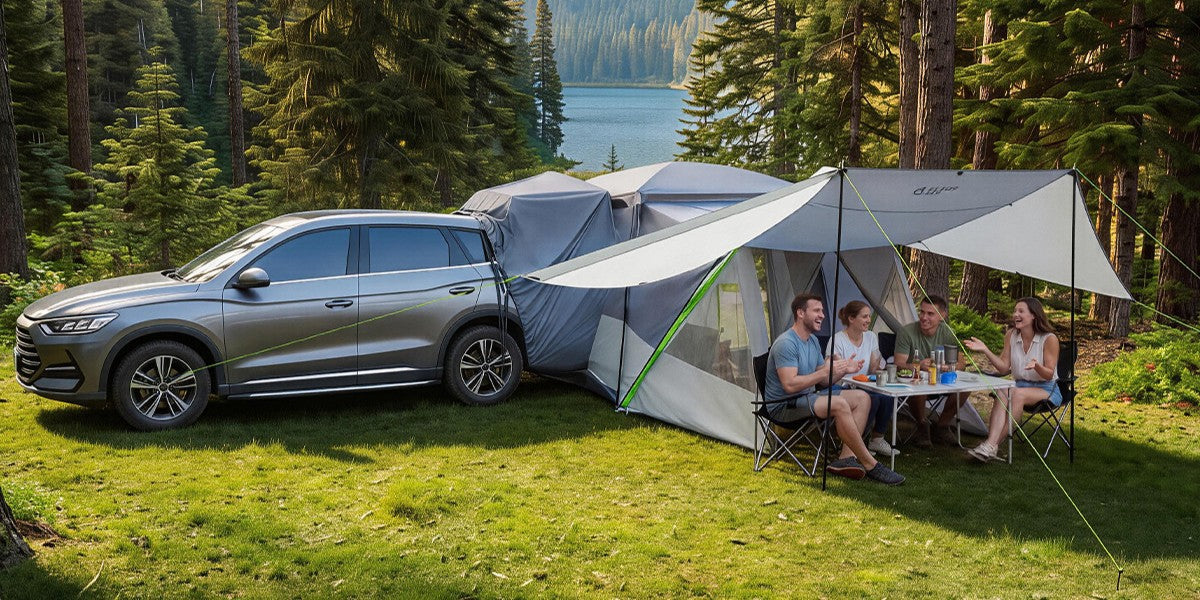
SUV camping keeps growing every season, and outdoor gear trend reports for 2026 point to the same shift: more families and weekend campers are turning their SUV into base camps instead of hauling a separate ground tent. If you already own an SUV, an SUV tailgate tent is often the simplest way to get more room at camp without buying a rooftop rack system or a new vehicle.
But shop around for even ten minutes, and the choices start to blur together. Some tents zip onto the hatch. Some pop up in seconds. Some need a pump instead of poles. Picking the wrong one usually means a slow, frustrating setup on your first night out, so it helps to know what separates the best suv tailgate tent options from the rest before you buy.
This guide covers what SUV owners should know before choosing a tailgate tent SUV shoppers can rely on trip after trip:
- The four ways tailgate tents are built and how each one sets up
- Whether you need an awning, a screen porch, or both
- How to match tent size to the number of people in your group
- The materials that decide whether a tent actually stays dry
- Two tested picks from JOYTUTUS, including our top recommendation
What Is an SUV Tailgate Tent?
Before comparing models, it helps to define what separates this style of tent from a rooftop tent or a plain ground tent.
An SUV tailgate tent is a tent that attaches to SUV using a fabric sleeve or straps that wrap around the open rear hatch, sealing the gap between the vehicle and the tent body. This turns your cargo area into part of the living space, so you can step straight from the trunk into the tent without going outside. Most tailgate tents can also be staked out on their own, so a tent attached to SUV one weekend can become a standalone shelter the next, which is one reason this style has become the most flexible entry point into SUV camping.

4 Ways SUV Tailgate Tents Are Built
Not every tailgate tent goes up the same way. From a construction standpoint, the market generally splits into four groups, and knowing the difference saves you from a slow setup at a dark campsite.
- Regular (pole-based) tents: the traditional design, built with fiberglass, steel, or aluminum poles that you thread through sleeves and connect by hand. Setup usually takes 10 to 20 minutes, and two people make it easier.
- Pop-up tents: these use pre-bent poles that spring into shape once released, so the frame is nearly instant. Some pop-up SUV tents, unfold into an 11 by 11 foot gazebo-style shelter that doubles as a standalone canopy when it is not attached to the car.
- Inflatable tents: instead of poles, an air pump inflates the frame in about a minute or two. There is nothing to snap together and nothing to lose at the campsite, which makes this option appealing for solo campers or anyone setting up in low light.
- Automatic instant tents: these open with a one-touch mechanism, similar to an instant umbrella, and are ready in well under a minute. They tend to cost more, but the trade-off is speed.
|
Build Type |
How It Opens |
Typical Setup Time |
Best For |
|
Regular (pole-based) |
Manual pole assembly |
10 to 20 minutes |
Budget buyers, first-time campers |
|
Pop-up |
Spring-loaded poles |
2 to 5 minutes |
Weekend trips, easy packing |
|
Inflatable |
Air pump |
5 to 15 minutes |
Solo setup, low-light arrivals |
|
Automatic instant |
One-touch mechanism |
1 to 5 minutes |
Campers who prioritize speed |
Awning, Screen Porch, or Both?
Beyond how a tent opens, the other major decision is what it does once it's up. This comes down to function rather than build style.
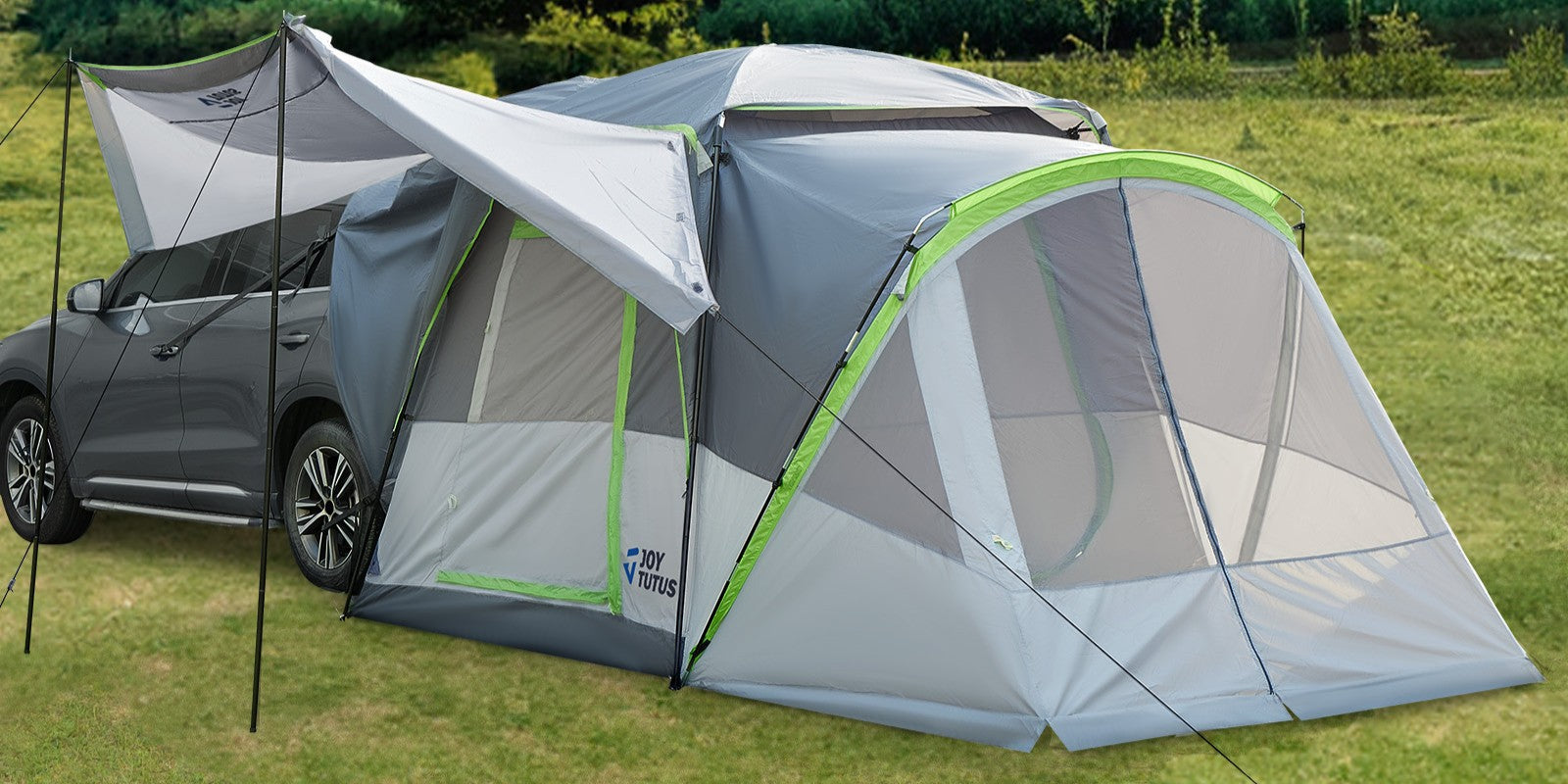
An awning is a covered, open-air section, usually attached to the side or front of the tent, that shades a table and chairs without fully enclosing the space. A screen porch goes a step further by wrapping that same area in bug netting, giving you a bug-free zone for cooking or relaxing before you unzip the sleeping compartment. Some tents include both, layering a screen porch for daytime use with an awning further out for extra shade. If your group tends to eat, play cards, or just hang out at the site for hours at a time, an SUV tent attachment for camping with a screen porch will get far more use than a bare-bones design.
Matching Tent Size to Your Camping Group
Getting the footprint right matters as much as getting the build style right, since an undersized tent turns a relaxed trip into a cramped one.
Start with a simple headcount, then check the listed capacity against your vehicle's rear opening, since not every SUV hatch tent fits every SUV, CUV, or minivan the same way. A tent rated for 4 to 6 people typically fits one or two air mattresses plus gear storage, while 2-room designs rated for 5 to 9 people separate a sleeping area from a living or porch space, which matters if you're camping with kids who go to bed earlier than the adults. If you regularly camp solo or as a couple but occasionally host a bigger group, a mid-size SUV tailgate tent with a detachable awning tends to flex better than buying the largest option available.
What Material Should a Good SUV Tailgate Tent Use?
Material is one of the first things any experienced camper checks, and it deserves attention before color or price.
Look for these details on the product listing before you buy:
- Polyester oxford fabric, usually listed as 150D to 210D. The higher the denier number, the more resistant the weave is to tearing and abrasion.
- PU waterproof coating, measured in millimeters. PU2000 is a reasonable baseline for an SUV tent attachment, and it means the fabric holds back roughly 2,000mm of water pressure before it seeps through.
- Pole material. Aluminum keeps the frame light and easy to pack, while steel adds extra stability in wind.
- A sealed or waterproof floor, which stops ground moisture from soaking through on grass or dirt.
- Mesh windows and doors, needed for airflow so condensation doesn't build up overnight.
Just as important, remember to close the doors and windows nearest the vehicle before rain starts. Even a well-rated waterproof tent can let water track in through an open connection point if it isn't sealed properly at the hatch.
Two SUV Tailgate Tents Worth Considering
Once you've settled on a build style and a size, it helps to see how these features come together in an actual product. Here are two tailgate tents from JOYTUTUS built around the considerations above.
Top Pick: SUV Tent with Screen Porch and Awning
If you want a tailgate tent with the most livable setup, the SUV Tent with Screen Porch and Awning is our top recommendation. It's built from 210D polyester oxford with a PU2000 waterproof coating, and the two-room layout adds roughly 60% more space than a standard single-room tailgate design. It fits up to 5 adults or 9 kids, with room for two air mattresses or five sleeping bags, and a 7-foot center height means you can move around without hunching over. The included screen porch keeps bugs out during the day, while the 3-sided awning adds extra shaded coverage outside that. It's available in two footprints, so you can match it to a smaller crossover or a larger SUV.

Budget Pick: SUV Tailgate Tent with Rainfly, Double Door
For campers who want a simpler, more affordable setup, the SUV Tailgate Tent with Rainfly and Double Door is a straightforward, pole-based tent built with aluminum poles for stability. The double-door layout improves both airflow and rain drainage through an extended eaves design, and it comfortably fits 4 to 6 adults with room left over for chairs and gear. It connects to most SUVs, CUVs, minivans, and hatchbacks, and it's a solid choice if you're buying your first tent for back of SUV and don't need the extra porch space.
Both tents are part of JOYTUTUS SUV tent, where you can compare sizes and fitment by vehicle. For a broader comparison of tailgate, standalone, and roof styles, our SUV tent guide covers the full lineup, and our car camping tent options article looks at picks built for both trucks and SUVs.
Final Thoughts
Choosing the best SUV tailgate tent comes down to matching three things to how you actually camp: the build style, the function, and the size. A pole-based tent keeps costs down, a pop-up or inflatable design saves time at the campsite, and a screen porch or awning adds real comfort if you spend long afternoons outside the vehicle. Check the fabric and waterproof rating before you commit, since those two details decide how the tent performs once you're miles from home. Browse the full tents collection at JOYTUTUS to compare tailgate options side by side, or visit JOYTUTUS to see the rest of the camping and overlanding gear built for SUV owners.

Leave a comment
All comments are moderated before being published.
This site is protected by hCaptcha and the hCaptcha Privacy Policy and Terms of Service apply.