

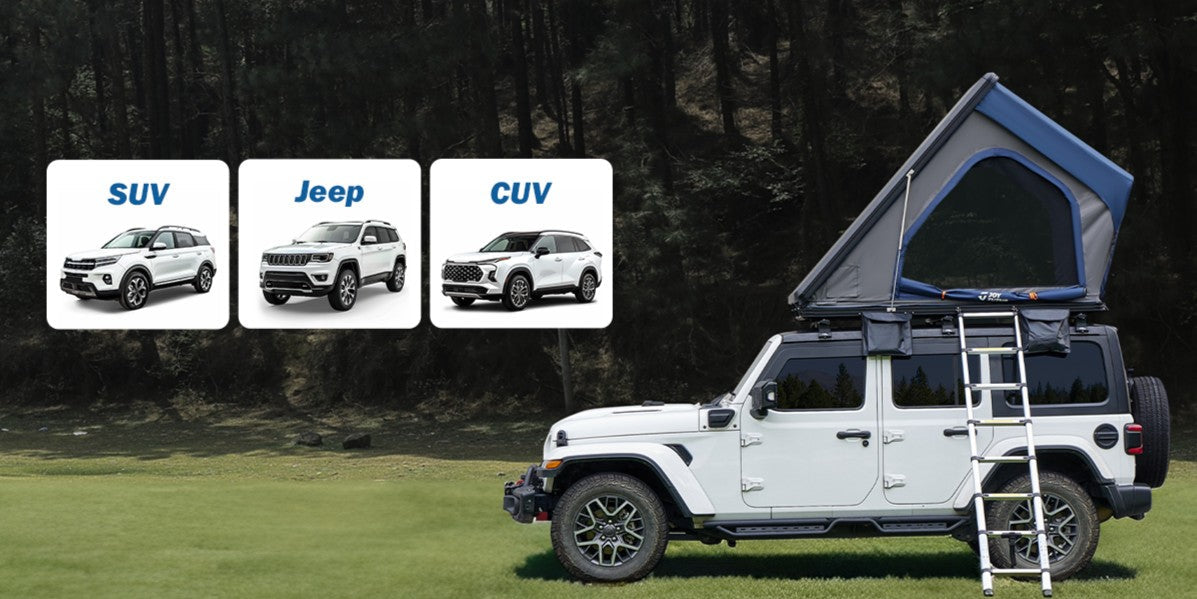
More people are parking their SUVs at the trailhead and sleeping on top of them instead of inside them. According to recent market research, the global rooftop tent industry was valued at roughly $1.42 billion in 2025 and is projected to grow at a compound annual rate of nearly 9 percent through 2034, with hard shell designs now making up almost half of all sales. North America alone accounts for close to 40 percent of that demand, driven largely by SUV and pickup truck owners who want a faster, more comfortable way to camp.
If you own an SUV and you are curious about joining that trend, you probably have questions. How does an SUV roof tent actually work? Is it worth the cost? Which type fits your vehicle and your camping style? This guide walks through everything you need to know before buying a roof tent for SUV use, from how the tents mount and set up to what separates a good one from a disappointing one.
Here is what we will cover:
- How an SUV rooftop tent works and why it has become so popular
- The difference between soft-shell and hard-shell roof top tents
- What to check on your vehicle and your budget before you buy
- What takes a little getting used to once you start camping this way
- Our top pick for a well-built, feature-rich SUV roof top tent
What Is a Roof Tent for SUV, and How Does It Work?
A roof tent for SUV use is exactly what it sounds like. It is a tent that mounts to a roof rack on top of your vehicle instead of sitting on the ground.
The idea is simple once you see it in person. The tent folds down flat into a low-profile shell or a soft cover while you drive. When you reach camp, you unfold it, extend the ladder, and climb up into a ready-made sleeping platform. Most models come with a built-in mattress, so there is no air pump or foam pad to wrestle with in the dark. Because the whole system sits on your roof rack, it does not take up any cargo space inside your SUV or in a truck bed.

This setup works well for SUVs in particular because most SUVs already have factory rails or crossbars or can be fitted with an aftermarket roof rack rated for the load. As long as the rack and roof can handle the static weight, a rooftop tent for SUV owners is one of the more straightforward accessories to add to an overlanding or camping setup.
Why SUV Owners Are Switching to a Rooftop Tent for SUV Camping
Ground tents still work fine for a lot of trips, but more SUV owners are choosing to sleep on the roof for a few practical reasons.
Sleep Above the Ground, Not On It
Being several feet off the ground keeps you away from rocks, roots, mud, and standing water. It also puts distance between you and ground-level pests, which matters a lot if you are camping somewhere with snakes, scorpions, or curious wildlife. Because the tent floor is rigid and elevated, uneven or rocky campsites that would ruin a ground tent stop being a problem.
Camp Set Up in Minutes
A basic ground tent, a sleeping pad, and a sleeping bag can take fifteen minutes or more to set up properly, especially in the dark or in bad weather. Many SUV roof tents open and close in under a minute with a one-touch or ladder-assisted mechanism. That difference matters most on trips where you are pulling into camp after sunset or moving to a new site every day, which is common on longer overlanding routes.
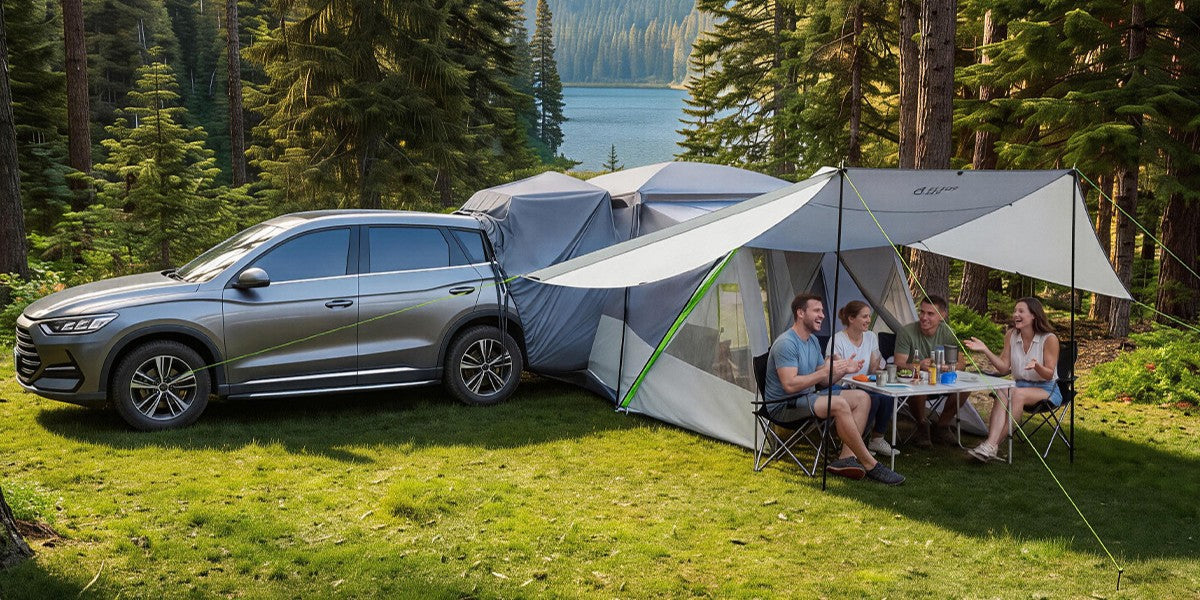
There is a tradeoff, though. You do lose the ability to drive off and leave your shelter standing at camp since the tent packs away with your vehicle. For families who camp at one site for several days and want a separate space for kids or guests, pairing a rooftop model with a ground-level option, like a tailgate style SUV tent, is a common workaround.
Soft Shell vs. Hard Shell: Which SUV Roof Top Tent Fits You?
Nearly every SUV roof top tent on the market falls into one of two categories, and the difference affects price, weight, setup speed, and durability.
|
Feature |
Soft Shell Rooftop Tent |
Hard Shell Rooftop Tent |
|
Setup time |
3 to 5 minutes, folds out with poles |
Under 1 minute, pops up or lifts open |
|
Weight |
Generally lighter |
Generally heavier, but often more compact folded |
|
Weather resistance |
Good, depends on rainfly quality |
Very good, rigid shell sheds rain and wind well |
|
Storage while packed |
Bulkier canvas bag on roof |
Low profile shell, better aerodynamics |
|
Typical price range |
Lower to mid range |
Mid to premium range |
|
Best for |
Occasional campers, tighter budgets |
Frequent campers, overlanders, all-season use |
Soft-shell tents are a reasonable starting point if you camp a few times a year and want to keep costs down. Hard shell tents cost more but tend to hold up better over years of use, close up faster, and add less wind resistance while driving, which matters if you spend a lot of highway miles between camp spots.
What to Check Before You Buy a Roof Rack Tent for SUV
A roof rack tent for SUV vehicles is a significant purchase, both in cost and in what it demands from your vehicle. Before you add one to your cart, work through this checklist.
- Confirm your roof rack's dynamic weight rating (while driving) and static weight rating (while parked), since these are almost always different numbers
- Add up the tent weight, mattress, and the number of people who will sleep in it, then compare that total against the static rating
- Measure your roof rack's mounting rails or crossbar spacing against the tent's hardware
- Decide how many people need to sleep in it regularly, not just on your biggest trip
- Think about how often you will open and close it, since frequent movers benefit more from faster hard shell designs
- Check what ventilation, insulation, and lighting features are included, especially if you camp in different seasons
Skipping the weight rating step is the most common and most costly mistake. A tent that looks great in photos is not worth much if your roof rack cannot safely support it while you are driving to camp.
What Takes Some Getting Used To
A rooftop tent is a comfortable, secure way to camp, but it does ask a little more of you than sleeping in a ground tent, and it helps to know that going in.
Climbing a ladder to bed is a small adjustment, especially for kids, older campers, or anyone who needs to get up during the night. Finding a level parking spot also matters more than it does with a ground tent, since your vehicle does not have a built in leveling system the way an RV might. A few inches of slope under one tire can make for an uncomfortable night, so it is worth carrying a set of leveling blocks or simply taking a minute to scout a flat spot before you park. None of this makes a rooftop tent for SUV owners a bad choice. It simply means the routine is a little different from what most campers are used to, and most people adjust within a trip or two.
Our Top Pick: The JOYTUTUS Hard Shell Aluminum SUV Rooftop Tent
If you are ready to invest in a hard shell roof top tent for SUV use, the JOYTUTUS Hard Shell Aluminum Rooftop Tent is built with the kind of details that matter once you are actually out at camp.
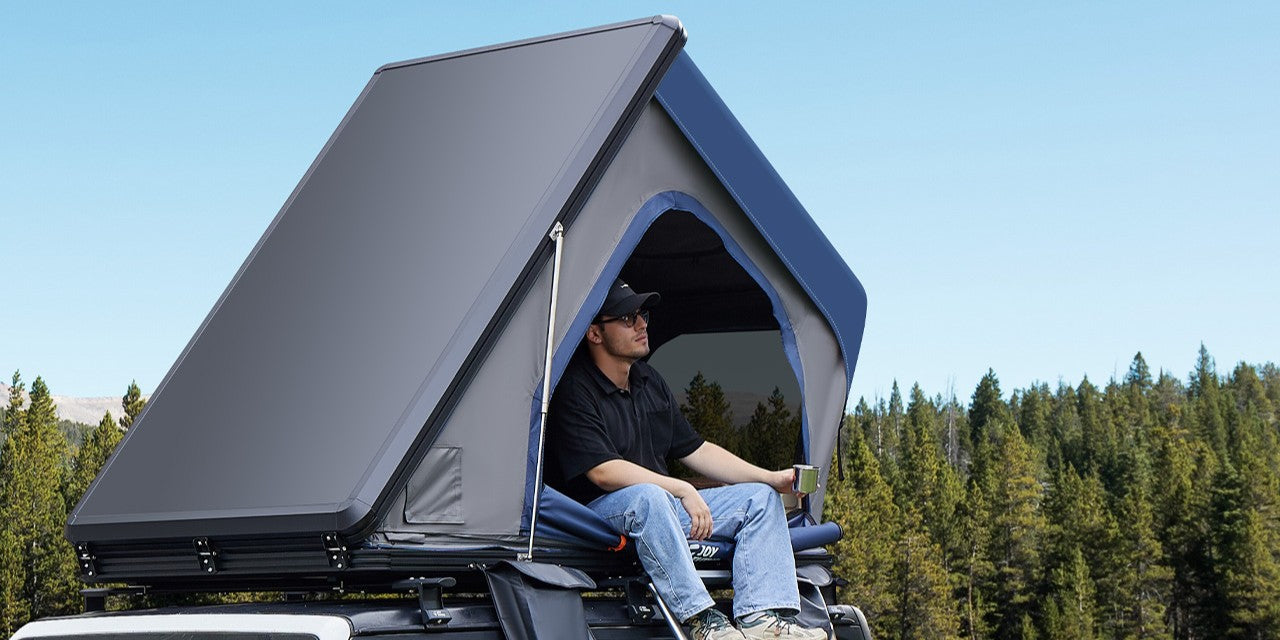
The shell is made from aircraft-grade aluminum alloy, which resists the warping and thermal expansion that lower-grade materials struggle with over time. A trapezoidal design gives the tent about 30 percent more usable interior space than a traditional rectangular hard shell, so two adults or a small family have real room to move around, not just lie flat. It sleeps two to three people comfortably.
Setup uses a one touch opening and closing system, so you can have it up in under a minute without tools or instructions, which matters after a long day of driving. Inside, a panoramic mesh skyview roof lets you look at the stars while improving airflow and cutting down on condensation, and a built-in LED light strip makes it easy to settle in after dark. The sleep system uses a 2-inch sponge mattress paired with a thin condensation pad underneath, which keeps moisture from building up beneath you overnight. It ships with a 2-year limited warranty and free shipping.

For SUV owners who want a rooftop tent that is durable enough for regular overlanding trips but still simple enough to set up solo, this is a strong option to start with. If you want to know more about SUV tents, you can browse our guide, including other SUV camping tent, inflatable SUV tent and pop up SUV tent options, on the JOYTUTUS site.
Final Thoughts
A quality SUV roof tent changes the way you camp. You spend less time setting up and breaking down, you sleep off the ground on a stable platform, and you can pull into almost any flat, legal parking spot and have a bed ready in minutes. Whether you choose a soft shell tent to start light or invest in a hard shell model built for years of overlanding, the right SUV rooftop tent should match your vehicle's weight capacity, your typical group size, and how often you actually plan to use it.
If you are still deciding between a rooftop setup and other options, it is worth comparing a few SUV tent choices side by side, including ground-level and other designs, before you commit. JOYTUTUS carries a full range of automotive travel products built around making camping and overlanding easier for SUV and truck owners alike.

Leave a comment
All comments are moderated before being published.
This site is protected by hCaptcha and the hCaptcha Privacy Policy and Terms of Service apply.