

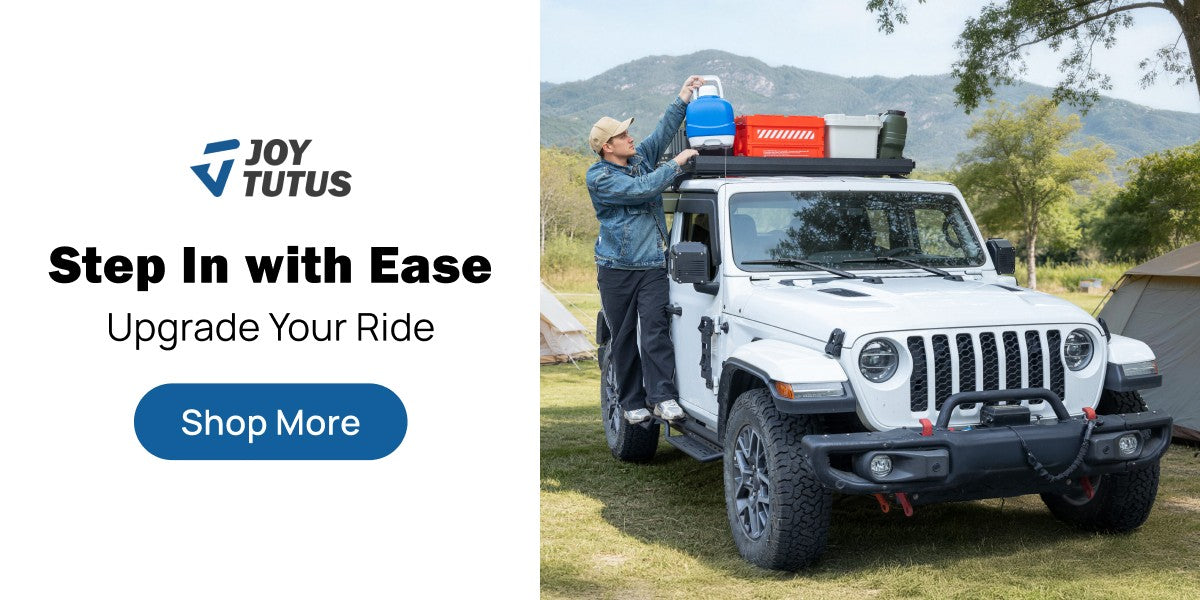
Jeep has kept busy this year. The brand rolled out retro inspired Rewind special editions for both the Wrangler and Gladiator, added a bold new color called Reign, and reworked the door hinges so pulling the doors off for a trail day is faster than before. All of that news points to the same thing: Jeep owners like to make their rigs their own. Running boards are one of the simplest ways to do it. Whether you drive a Wrangler for weekend overlanding or a Gladiator for hauling camp gear, a good set of Jeep running boards makes climbing in, reaching the roof, or grabbing something from the truck bed a lot easier. This guide covers why they matter, how Wrangler and Gladiator models differ, and what to check before you buy.
Here is what this article covers:
- Why Jeep side steps improve access, safety, and door protection
- How Jeep wrangler running boards and Jeep gladiator running boards are built differently
- What dual-tier steps do for roof racks and truck bed loading
- A side by side look at JK, JL, and Gladiator JT fitment
- Installation, upkeep, and customization tips
What Do Jeep Running Boards Actually Do?
Before comparing models, it helps to know what these steps are actually built to do.
A Wrangler or Gladiator sits higher off the ground than most passenger vehicles, especially once you add a lift or bigger tires. That extra height is great on the trail but not so great when you are stepping down from the driver seat with your hands full. Running boards close that gap. Here is what a good set adds to your Jeep:
- Easier entry and exit, especially on a lifted Jeep or one with larger tires
- A stable second step, so you can reach a roof rack, a soft top, or gear stored up top
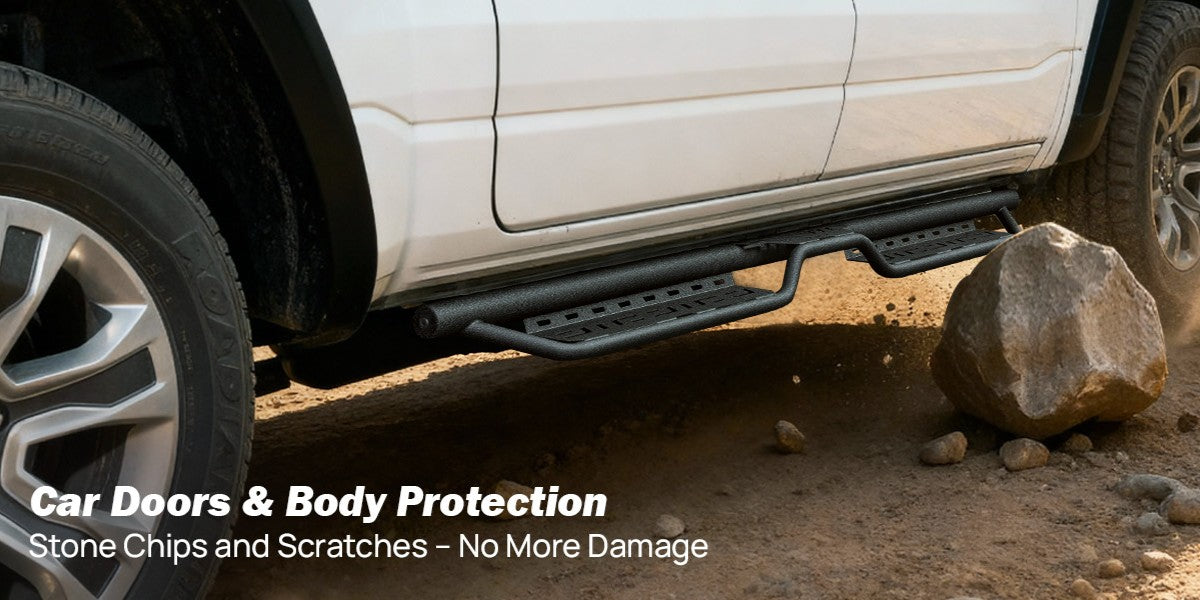
- A layer of protection for the rocker panel and doors against rocks and trail debris
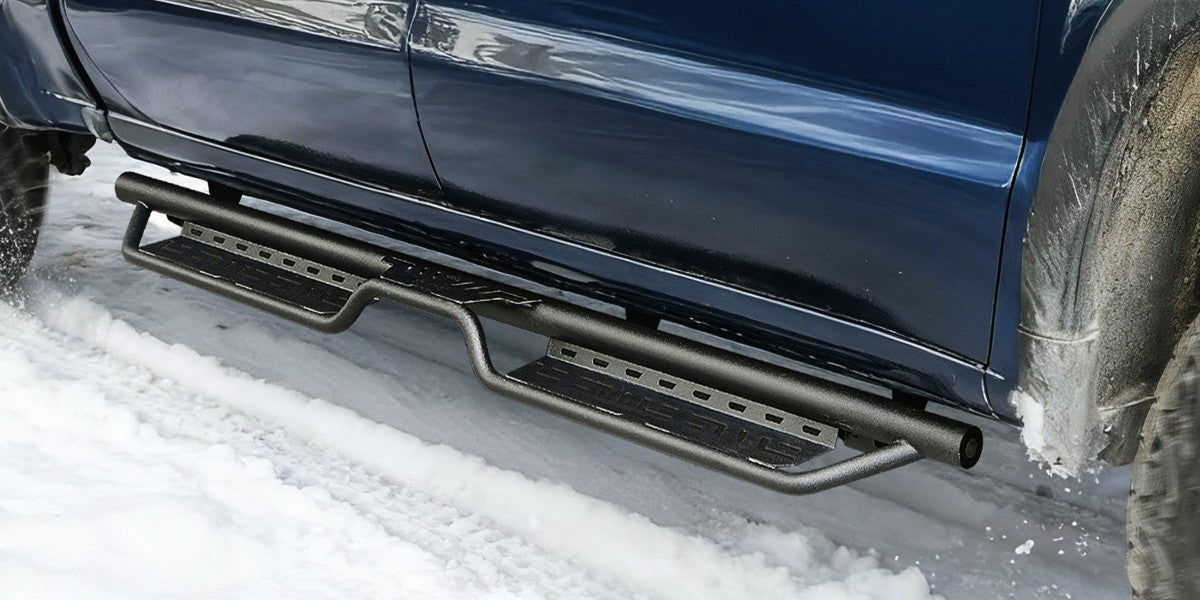
- Better footing in rain, mud, or snow, thanks to a textured step surface
- A cleaner, more finished look that matches the factory body lines
Some off-road owners worry that running boards will cut into ground clearance and change how the Jeep handles on the trail. In practice, the effect is small, and most bolt-on boards can be removed in an afternoon if you decide you want them off for a specific trip. For daily driving, camping, and most trail use, the access and protection they add outweigh that small trade-off.
Jeep Wrangler Running Boards: Built for Trail Days and Family Trips
Wrangler owners tend to buy their Jeep for overlanding, off-roading, and camping, so their running boards need to earn their keep in more than one situation.
It is worth remembering that the Wrangler JK and Wrangler JL are not the same vehicle. The JL is the JK's successor, and the two generations use different body mounting points, so running boards for Jeep Wrangler models are not interchangeable between them. A set built for a JK 4-Door will not bolt onto a JL 4-Door, and vice versa. Always match your running boards to your exact Wrangler generation and door count before ordering.
Once you have the right fit, Jeep Wrangler side steps solve a few real problems for this crowd:
- Trail protection. It is common to clip a rock, stump, or rut while off-roading. A sturdy running board takes that hit instead of your rocker panel or door.
- Roof and gear access. When you are loading a rooftop tent, awning, or a stack of camping gear, a dual-tier step gives you a stable platform to reach the top of the Jeep. If you are shopping for a roof rack to pair with your setup, it is worth browsing our dedicated roof rack collection before you commit to a build.
- Family friendly access. Getting kids or older family members in and out of a lifted Wrangler is much easier with a wide, textured step underneath the door.

JOYTUTUS builds Wrangler side steps specifically for JK 4-Door and JL 4-Door models, each rated for up to 550 pounds per side, with a rust resistant black wrinkle finish that holds up to weather and trail wear. You can see the full JK and JL lineup on the running boards collection page, and the Wrangler running board guide goes deeper on fitment by trim.
Jeep Gladiator Running Boards: Access for the Cab and the Bed
Gladiator owners want the same off-road capability as a Wrangler, but with a bed to haul gear. That combination changes what they need from a running board.
Like Wrangler owners, Gladiator drivers benefit from easier roof access and door protection. But because the Gladiator has a truck bed, Jeep Gladiator running boards need to do one more job: help you reach cargo loaded behind the cab. JOYTUTUS addresses this with the middle and rear dual-tier design that makes it easier to check tie-downs, load a cooler, or grab a bag.

Jeep gladiator side steps from JOYTUTUS are engineered for the 2020 to 2026 Gladiator JT, built from reinforced carbon steel tubing with a 550 pound capacity per side and a wide, deeply textured tread for grip in wet or muddy conditions. Details on fitment and features are in the Gladiator running board guide.
Jeep Wrangler vs Gladiator Side Steps: Fitment Comparison
Because the Wrangler and Gladiator use different frames and body styles, one set of running boards will not fit both, and most running boards on the market are a bolt-on design that must match your vehicle's factory mounting points.
|
Model |
Years Covered |
Step Design |
Best Suited For |
|
Wrangler JK 4-Door (SUV) |
2007–2018 |
Single or dual-layer options |
Daily driving, family use, light trail work |
|
Wrangler JL 4-Door (SUV) |
2018–2026 |
Single or dual-layer options |
Overlanding, camping, roof rack access |
|
Gladiator JT 4-Door (Truck) |
2020–2026 |
Dual-layer (middle/rear) recommended |
Loading gear, bed access, trail use |
This is why checking the exact model, generation, and door count matters before ordering. A quick way to confirm is to check your Jeep's VIN or door jamb sticker against the fitment listed on the product page.
Installation and Customization
Buying the right board is only half the job. Fit and finish depend on getting the installation right too.
JOYTUTUS running boards for Jeep are designed around factory mounting points, so there is no drilling required. Most owners can complete the install with basic hand tools in under an hour, which is why these boards are a popular do-it-yourself project rather than a shop job. If you want a full walkthrough before you start, the installation guide covers the process step by step.
If you like a personal touch, select JOYTUTUS models that include a removable center trim panel. You can pull it off, paint it in a color that matches your Jeep's accent trim, and reinstall it, giving your running boards a one-of-a-kind look without buying a whole new set.
How to Choose the Right Jeep Side Steps
A few practical questions can help narrow the field before you buy:
- What is your Jeep's exact model and year? JK, JL, and JT all use different brackets.
- How wide is the step surface you want? Wider steps give more room for boots and gear; narrower designs keep a leaner profile.
- What finish fits your climate? A rust resistant coating matters more if you drive through snow, salt, or coastal air.
- Do you already have rock sliders installed? Some running boards are not meant to be paired with existing sliders.
For more background on materials and styles across the running board market, the running board options guide is a useful next stop, and the pickup running board guide covers the truck side of the lineup if you also own a Ram, Chevy, or GMC.
Final Thoughts
Running boards are a small upgrade that solves a real, everyday problem for Jeep owners. Wrangler drivers get easier entry, roof access for camping gear, and a layer of protection on the trail. Gladiator drivers get all of that plus a practical way to reach the truck bed. Because the JK, JL, and Gladiator JT all use different mounting points, the key is matching the running board to your exact model rather than shopping by looks alone. Once you have the right fit, a bolt-on installation and a removable trim panel make it easy to get a finished, custom look without a trip to the shop. If you are ready to compare options, the full lineup is available on the JOYTUTUS running boards collection page.
FAQs
Q1: Will Wrangler JK running boards fit a JL?
A: No. The JK and JL use different body mounting points, so running boards built for one generation will not bolt onto the other. Always confirm your exact model and door count before ordering.
Q2: Do running boards actually reduce ground clearance off-road?
A: There is a small effect, but it is minor for most driving and trail use. Bolt-on running boards can also be removed if you want maximum clearance for a specific trip.
Q3: Will running boards work if I already have rock sliders installed?
A: Not always. Some running board designs are not meant to be paired with existing rock sliders or rocker guards, so check the fitment notes for your specific product before buying.

Leave a comment
All comments are moderated before being published.
This site is protected by hCaptcha and the hCaptcha Privacy Policy and Terms of Service apply.