

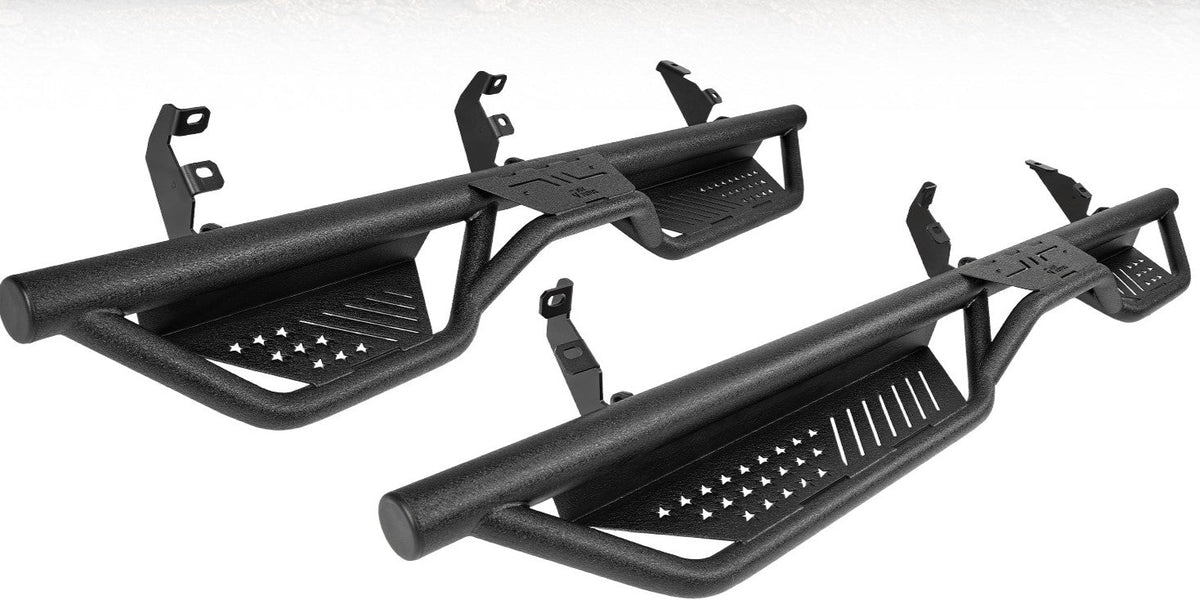
Ford Ranger running boards are one of the first upgrades new owners think about, and the timing makes sense. According to Ford Authority, U.S. Ranger sales rose about 19% to 17,775 trucks in the first quarter of 2026. That followed a record 2025, when 70,960 Rangers were sold. More Rangers on the road means more owners asking the same question: how do I make getting in and out easier without hurting the truck’s looks or off-road ability?
The Ranger sits lower than a full-size pickup, but all-terrain tires, off-road trims like the Tremor and Raptor, and roof top tents can raise the climb quickly. A good set of Ford Ranger side steps gives your family a safe place to step and keeps mud off the lower doors. This guide explains your options in plain language.
Here is what you will find below:
- Why Ranger owners add running boards and side steps
- The main styles and materials, compared in one table
- Fitment by model year, cab, and trim
- A six-point checklist for choosing the right set
- Overlanding use, installation, and common questions
Why Ford Ranger Running Boards Are Worth Adding
A step may look like a small upgrade, but it solves problems you notice every day. A wide, textured surface gives kids, older family members, and anyone carrying bags a steady place to plant a foot. It also blocks the spray that kicks up from wet roads and gravel.
Here is what most owners gain:
- Easier entry for children, older passengers, and pets
- Protection for lower doors and rocker panels from mud, gravel, and road salt
- A step to reach a roof rack, cargo box, or roof top tent
- A cleaner, more finished look from the side
New to the topic? Our guide on what are running boards explains the basics.
Ford Ranger Running Boards vs Side Steps: Which Style Fits?
People use both names for the same upgrade, but the designs are different. Knowing the difference narrows your search fast.
Fixed running boards are wide, flat platforms that stay in place. They are simple, affordable, and need no wiring. Power boards slide out when you open a door and tuck away when you close it, so they keep ground clearance, but they cost more and need wiring. Nerf bars and tubular side steps are narrower and lighter, and they sit tight to the body, which suits trail builds. Some brands also make dual-tier designs with a second step for easier reach.
|
Style |
Step width |
Installation |
Ground clearance |
Best for |
|
Fixed running boards |
Wide |
Bolt on |
Slightly reduced |
Daily driving and family use |
|
Power running boards |
Wide |
Bolt on plus wiring |
Full when retracted |
A step without losing clearance |
|
Nerf bars and tubular steps |
Narrow |
Bolt on |
Least impact |
Trail driving and a rugged look |
Materials for Ford Ranger Side Steps
Material decides how long the step looks good. Carbon steel is strong and budget-friendly, but it needs a quality coating to resist rust. Aluminum is lighter and naturally resists corrosion. Stainless steel costs more, but it offers the best rust resistance and a polished look. If you drive in snow or on salted roads, choose a tough coating or stainless steel.
Ford Ranger Running Boards Fitment by Model Year and Cab
Fitment is the most common reason boards get returned. A board made for the wrong cab leaves a gap at one door or hangs past the last one.
Ford brought the Ranger back to the U.S. for 2019 and launched a new generation for 2024. The two generations have different body shapes, so boards are usually not interchangeable between them.
2019 to 2023 Ford Ranger Side Steps
This generation came as a SuperCab or a SuperCrew. The SuperCab has two smaller rear doors, while the SuperCrew has four full-size doors and needs a longer board to cover every entry point. Choose by door count, not only by model year.
2024 and Newer Ford Ranger Running Boards
The newer Ranger is sold in the U.S. as a SuperCrew, so most owners shop for four-door boards. Trim matters here. The Raptor has a wider body than other trims, and the Tremor has its own off-road setup. Look for a listing that names your exact year and trim.
How to Choose Ford Ranger Side Steps: A Six-Point Checklist
Use this list before you buy. It takes five minutes and can save you a return.
- Confirm your model year, cab style, door count, and trim.
- Pick a style (fixed, power, or tubular) based on your budget and how you drive.
- Check the weight rating. Most boards are rated between 300 and 500 pounds per side. Match it to the heaviest person who will use the step.
- Look for a textured, slip resistant tread for rain, mud, and snow.
- Choose a material and finish that suit your climate.
- Confirm the kit uses factory mounting points, since that usually means no drilling.
If you drive off-road often, give ground clearance extra attention. A low step can catch on rocks and ruts.
Ford Ranger Running Boards for Overlanding and Camping
Rangers make popular camp trucks, and a good step helps more than most people expect.
Dual-layer designs give you higher footing to reach a roof rack, kayak, cargo box, or roof top tent. They also help when you wash the roof. On the trail, tubular steps tend to handle impacts better and keep more clearance. If you plan to sleep out of the truck, browse Joytutus truck tents to build a matching setup.
Installing Ford Ranger Running Boards at Home or at a Shop
Most fixed kits are bolt on, and many use factory mounting points, so drilling is rare. Plan on about 30 to 60 minutes per side for a first install. The basic steps look like this:
- Slide the bolt plates into the factory holes, if your kit uses them.
- Attach the brackets and leave the bolts finger tight.
- Set the board on the brackets and line up every slot.
- Tighten the bracket bolts first, then the board bolts, and give the board a shake test.
- Repeat on the other side.
A shop usually charges about $50 to $150 or more in labor. That cost makes the most sense for power boards because of the wiring. Our running board installation guide covers tools and extra tips.
Own another Ford? Read our guides for the F150, F250, Bronco, and Explorer, or the full Ford running boards guide.
Final Thoughts
Ford Ranger running boards are a simple upgrade with a daily payoff. They make the truck easier to enter, protect the lower doors, and give you a step for roof gear. The right choice comes down to three things: your exact year, cab, and trim, a style that matches how you drive, and a weight rating that fits your passengers.
Fixed boards suit family trucks. Tubular Ford Ranger side steps suit trail builds. Power boards suit owners who want a step without losing clearance. Confirm fitment before you order, and plan about an hour for installation. Joytutus is committed to providing automotive travel products that keep every trip safe and enjoyable. Visit the Joytutus homepage to complete your truck setup.
Ford Ranger Side Steps FAQs
Q1: Do Ford Ranger running boards fit every Ranger?
No. Fitment depends on model year, cab style, door count, and trim. The Raptor and Tremor in particular need listings that name them. Always check the fitment details before you order.
Q2: Are Ford Ranger side steps hard to install?
Not for most owners. Fixed kits usually take 30 to 60 minutes per side with basic hand tools. Power boards add a wiring step, so many owners use a shop for those.
Q3: Will running boards hurt my Ranger’s off-road ability?
Fixed boards lower clearance slightly. Tubular steps have the least impact, and power boards retract out of the way. Pick the style that matches how often you leave the pavement.

Leave a comment
All comments are moderated before being published.
This site is protected by hCaptcha and the hCaptcha Privacy Policy and Terms of Service apply.